
Dubai Luxury Real Estate Q1 2026: Capital Rotation, Golden Visa Flows and Prime Market Signals
Capital rotation inside Dubai’s prime estate market
Dubai luxury real estate in Q1 2026 is less about a speculative boom than a re-pricing of risk across the emirate’s prime estate market. According to Dubai Land Department (DLD) data for January to March 2026, the Dubai real estate market recorded 44,150 property transactions with a total value of about AED 138.7 billion. That represents a year-on-year increase in value of more than 20 percent, while volumes rose by just over 4 percent, reflecting a period where capital is concentrating at the top end rather than chasing every new launch. For an exclusive estate owner, that gap between value and volume is the real signal, not the headline growth.
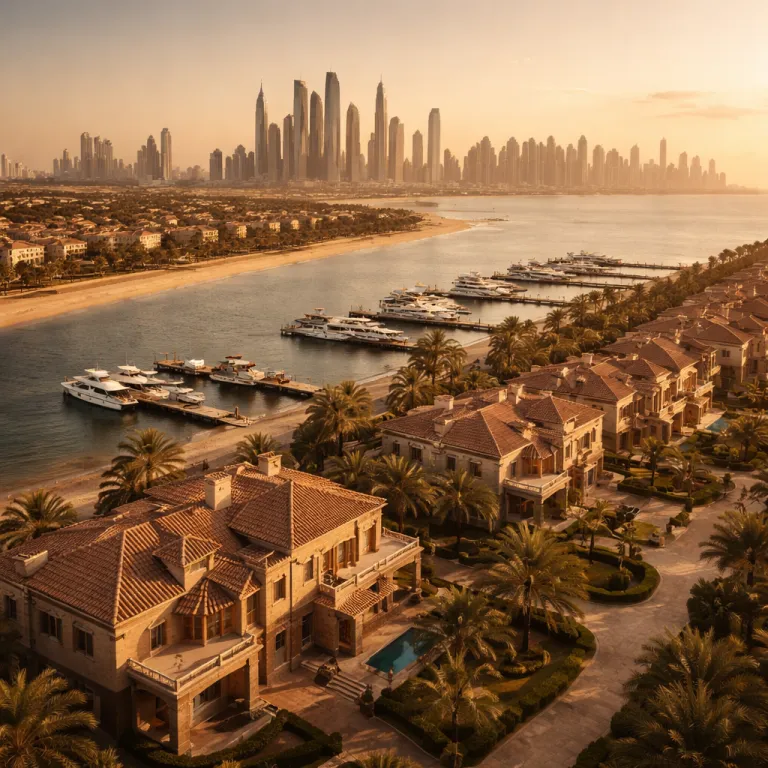
Within the wider Dubai property market, capital is concentrating in a narrow spine of luxury properties across Palm Jumeirah, Emirates Hills, Jumeirah Bay Island, Dubai Hills and Downtown Dubai, where each estate transaction now routinely clears the AED 20 million threshold. In these enclaves, the estate sector has recorded a deepening pool of cash buyers from the wider UAE and from Europe, who are treating each property as a long term wealth reserve rather than a speculative flip. That shift in investor behaviour is helping the market maintain surprising stability despite regional tensions and global rate uncertainty. Dubai Land Department records for Q1 2026 show that the estate market in these districts is absorbing fewer but larger deals, with individual transactions often exceeding AED 100 million and pushing the total quarterly value comfortably into the multi-billion-dirham range.
For context, prime residential values in the emirate are forecast by international consultancies such as Knight Frank and Savills to rise by roughly 3 to 5 percent this year, while the broader estate sector is already printing double digit price gains in some micro locations. That divergence inside the same city underlines how the Dubai property landscape has become a set of distinct micro markets, where an Abu Dhabi based family office might treat a Palm Jumeirah villa as a safe balance sheet asset while approaching a Downtown penthouse as a yield play in the short rental market. For owners already holding multiple luxury properties, the strategic question is whether to rotate out of secondary stock in peripheral areas and into fewer, higher conviction assets in the most supply constrained waterfront and golf course communities, aligning each Dubai property with a clearly defined role in the global portfolio.

Golden Visa arbitrage, rental yields and regional capital flows
The Golden Visa framework remains the quiet engine behind much of the Dubai luxury real estate Q1 2026 activity and the broader UAE estate market. With the threshold for a ten year residency permit still set at AED 2 million per property, the estate market has effectively hard wired a floor into the pricing of many mid prime apartments, because international investor demand clusters just above that AED 2 million level when aggregated across portfolios. For ultra high net worth investors, the more interesting play is not a single qualifying unit but a curated stack of assets that each meet the Golden Visa criteria while also compounding rental income and supporting long term residency plans.
Across the UAE, gross rental yields on luxury real estate in Dubai are running between roughly 5 and 9 percent, compared with about 2 to 4 percent in London prime and 3 to 5 percent on Miami waterfront condominiums at current prices, according to recent brokerage estimates from firms such as CBRE and JLL. That spread is pulling in capital from Abu Dhabi and from other regional hubs, with some Abu Dhabi property investors now rebalancing away from local office towers into Dubai property that can be placed on flexible rental platforms to capture both seasonal and long term demand. In practice, this means that the Dubai real estate rental market is no longer a side note to the sales market, but a core part of investor activity and a key driver of investor confidence in the estate sector.
Regional tensions have paradoxically funnelled more money into the city rather than away from it, as families from across the Middle East seek a jurisdiction where the property market is dollar linked, legally predictable and administratively efficient. The market maintained its momentum through March, with the Dubai Land Department reporting sustained estate transactions even as other regional asset classes saw outflows, reflecting a perception of Dubai as a geopolitical hedge within the wider UAE and Gulf. For owners thinking globally about lifestyle as well as yield, the same logic that sends them to design a refined honeymoon tour in Italy also now underpins the choice to hold a pied à terre in Downtown Dubai or a villa on Jumeirah Bay as part of a diversified cross border estate, balancing lifestyle, rental market exposure and long term capital preservation.
Supply pipeline, frothy segments and where value still hides
Beneath the strong headline numbers for Dubai luxury real estate Q1 2026 lies a more nuanced picture of supply and investor risk. Off plan launches in certain waterfront clusters and branded residence towers are starting to look frothy, with developers marketing ever smaller units at ever higher AED per square metre, which could test investor confidence if global liquidity tightens later in the year. The risk is most acute in segments where the promise of short term rental arbitrage has been oversold, and where the underlying estate market fundamentals do not justify the implied yields or the projected exit prices.
By contrast, low density villa communities such as Dubai Hills, Emirates Hills and select pockets of Jumeirah remain structurally undersupplied, with very few new plots being recorded by the Dubai Land Department and limited scope for vertical expansion. In these areas, the combination of constrained land, deep end user demand and a mature rental market suggests that both capital values and rental income have room to grow on a long term basis, even if the broader property market cools. For globally mobile owners who already hold assets from Abu Dhabi to the Maldives and perhaps a coastal retreat like a luxurious villa in Weligama in Sri Lanka, the most rational Dubai allocation today is often a small number of large, irreplaceable estates rather than a scatter of speculative apartments that depend on perpetual demand growth.
From January to March, the year on year data shows that while the number of real estate transactions only inched higher, the total AED value surged, reflecting a flight to quality and scale within the Dubai property market. That pattern should guide your next moves in the Dubai real estate and wider UAE property markets, especially if you are balancing exposure to Abu Dhabi property, London townhouses and Miami waterfront condominiums within a single family balance sheet. For an exclusive estate owner, the real opportunity now lies in using this quarter as a reference point to prune weaker holdings, double down on the most resilient luxury properties and align every asset with a clear role in your global portfolio, from income generator to legacy estate, while monitoring how the supply pipeline evolves over the coming quarter.
Key quantitative signals for Dubai’s prime estate
- Dubai completed 44,150 real estate transactions in the first quarter of 2026, with total recorded values of about AED 138.7 billion across the estate sector, according to Dubai Land Department data for the January–March period year on year.
- Transaction volumes increased by just over 4 percent compared with the same period year on year, while total market value rose by more than 20 percent, reflecting a shift toward higher ticket luxury properties and larger average deal sizes.
- Prime residential prices in the city are forecast to rise by roughly 3 to 5 percent over the current year, suggesting a more measured phase of growth after the recent surge in values and supporting perceptions of market stability.
- Gross rental yields on Dubai luxury real estate currently range between about 5 and 9 percent, compared with roughly 2 to 4 percent in London prime districts and 3 to 5 percent in comparable Miami waterfront stock.
- The Golden Visa programme maintains a minimum property investment threshold of AED 2 million per unit for a ten year residency permit, anchoring demand in the mid prime and upper mid market segments and reinforcing long term investor activity.
Questions exclusive estate owners are asking now
How sustainable is the current increase in Dubai luxury values?
The sustainability of the recent increase in Dubai luxury values depends on three intertwined factors: supply discipline, global liquidity and regional capital flows. With limited new land in prime coastal and golf communities, the physical constraint on new luxury properties supports prices, while continued inflows from the wider Middle East and Europe provide a demand buffer. If developers avoid overbuilding in the off plan apartment segment and global interest rates stabilise, the estate market can transition from a rapid upswing to a more stable, income driven phase that rewards patient holders of core Dubai property.
Where does Dubai sit versus London and Miami on net yields?
On a net basis, Dubai usually offers higher yields than London or Miami for comparable quality assets, even after service charges and realistic vacancy assumptions. A well located Dubai property in a prime or near prime district can often deliver a net yield in the mid single digits, while London prime stock frequently falls closer to 2 percent once all costs are included. Miami waterfront condominiums sit somewhere in between, but they carry higher exposure to local tax changes and climate related insurance costs, which many investors now weigh carefully against Dubai’s relatively predictable regime and the depth of its rental market.
Which Dubai sub markets still offer genuine value for long term holders?
For long term holders, genuine value in Dubai tends to cluster in low density villa communities with strong end user demand and limited new supply. Areas such as Dubai Hills, parts of Jumeirah and select streets in Emirates Hills still offer a balance of lifestyle quality, rental depth and capital preservation that many high rise districts cannot match. The key is to focus on plots and buildings that would be extremely difficult to replicate, rather than chasing the latest branded tower or aggressively marketed off plan launch that relies on short term sentiment in the estate market.
How are regional tensions influencing investor behaviour in the UAE estate sector?
Regional tensions have pushed many families and institutions to treat Dubai as a safe operating base, rather than deterring them from the UAE estate sector. This has translated into larger average ticket sizes, more all cash transactions and a preference for freehold assets in politically stable jurisdictions over financial instruments in more volatile markets. For an exclusive estate owner, that shift reinforces the logic of holding at least one core Dubai estate as part of a diversified regional strategy, using the city’s legal framework and currency stability as a hedge against uncertainty elsewhere.
What risks should ultra high net worth owners watch in the current quarter?
The main risks in the current quarter are concentrated in over hyped off plan segments, where pricing assumes perpetual rental growth and frictionless exits. Owners should stress test their portfolios against higher financing costs, slower resale liquidity and potential delays in project delivery, especially in districts with a heavy pipeline of similar units. At the same time, it is prudent to review exposure to any single developer or community and to ensure that each property has a clear role, whether as a yield engine, a lifestyle asset or a long term legacy estate, so that the overall balance sheet can absorb volatility in any one part of the Dubai real estate market.