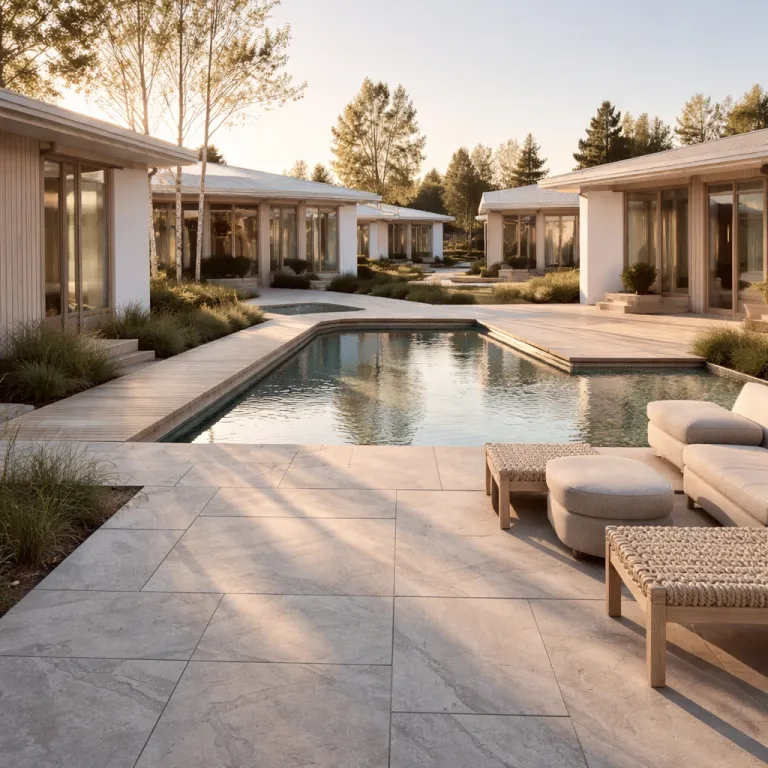

The compound as a structural answer to modern family realities
Multi dwelling family compounds have become the quiet default for serious estate owners. Rising care costs, remote work permanence and succession complexity have made the isolated single residence on a few acres feel strategically thin. The compound is not a fashion statement; it is a structural response in high end real estate and a practical way to organize land, water, buildings and people on one coherent property.
When you already control several properties across different acres of prime land, the question is no longer whether you can host your family but whether you can host them well. A compound configuration lets you orchestrate multiple dwellings, each room calibrated to a specific generation, caregiver or guest profile, while still operating as one coherent property. That shift in mindset turns your estate from a beautiful liability into a flexible operating system for family life, where every square foot, storage space and circulation path has a defined role.
Think of a coastal ranch located on two or three contiguous parcels, where the main house anchors the south side and a series of guest casitas step down toward the river. The same ranch offers a separate caretaker cottage, a wellness pavilion and a discreet staff compound, all stitched together by shared infrastructure such as a central water system and security backbone. In this model, a luxury compound is defined less by a single large house and more by how intelligently the land, buildings and circulation patterns choreograph privacy and proximity while preserving expansive views and access to the water’s edge.
Owners who built traditional estates on 5 to 20 acres now face a choice. Either retrofit those properties into multi dwelling compounds or accept that their real estate no longer matches the way their family actually lives, works and ages. The most sophisticated portfolios I see are quietly reclassifying every estate through a compound lens before the next generational transfer locks in outdated layouts and underutilized ranch features.
From sentimental estate to functional family platform
Many exclusive estate owners still treat the primary property as a sentimental anchor rather than a functional platform. That emotional attachment is understandable, yet it often prevents rational decisions about where each family member should be located on the land and how shared amenities are used. A compound based approach forces more architectural and financial discipline, because every building and every room must earn its place in the ecosystem and support clear terms of privacy.
On a mountain ranch in the American west, for example, the main residence might hold the great room, formal dining and primary suites, while a secondary lodge contains a game room, an exercise room and flexible bunk rooms for younger generations. Both buildings share the same water rights, the same backup generator and the same security system, but they deliver very different experiences and levels of privacy. This separation of functions across multiple structures is what makes ranch features truly work year round for a complex family and turns the ranch into a resilient, all season base.
Owners who embrace this platform mindset also start to see their estates as modular. A guesthouse can be reprogrammed into a medical suite for aging parents, or a former staff wing can become a remote work hub with generous storage space and acoustic isolation. In each case, the compound’s value lies not only in expansive views or river frontage but in how quickly the property can adapt to new family needs without sacrificing terms of privacy or architectural coherence.
The economic logic: care costs, remote work and privacy premiums
The financial case for compound style luxury real estate is no longer subtle. Long term elder care in top tier markets now rivals the carrying cost of building a well designed secondary dwelling on your own land. When you compare those trajectories over a decade, the compound often wins decisively because the same square foot investment can serve multiple generations.
Consider a coastal estate located on 3 to 8 acres in the south of France or along the Algarve, where land values and medical services both command premiums. A purpose built garden pavilion with barrier free access, medical grade water filtration and proximity to the main house can replace or delay institutional care, while keeping the family physically close. The same structure later reverts to a guest suite or wellness studio, preserving capital instead of sinking it into non recoverable fees and keeping the property’s program aligned with changing family needs.
To illustrate the order of magnitude, a private care facility in leading European resort areas can easily exceed €120,000 per person per year as of 2023, according to cost benchmarks published by providers such as Korian and Orpea in their annual reports. By contrast, a 900 to 1,200 square foot pavilion located on existing estate land might require a one time investment in the low seven figures, then operate at relatively modest incremental cost while serving multiple generations over time.
Remote work permanence adds another layer of logic. When multiple adult children and their partners can work from anywhere, the family compound becomes a magnet, provided each person has a private office, reliable digital infrastructure and acoustic separation from the great room and social zones. I see owners reconfiguring former staff quarters into compact work lofts, each with its own entrance, storage space and access to shared amenities such as the exercise room and game room, turning the estate into a year round professional base rather than a seasonal retreat.
Privacy and security economics also tilt toward compounds. It is more efficient to secure one large property with a unified system of cameras, gates and patrols than to manage several scattered apartments or houses across a city. This is particularly evident in markets like Miami, where the polo lifestyle and equestrian circuits intersect with waterfront estates; consolidating family members on a single, well protected site reduces exposure while enhancing daily quality of life, a dynamic explored in depth in this analysis of the Miami polo lifestyle for exclusive estate owners.
Liquidity penalties and why they are often overstated
The main counter argument you will hear is liquidity. A highly customized compound, the logic goes, will appeal to fewer buyers than a conventional single family estate, especially when the property sprawls across many acres with multiple dwellings. That concern is real, but it is frequently overstated for the top decile of the market.
In practice, the buyer pool for ultra prime real estate is already narrow, and those buyers increasingly expect multi dwelling flexibility. In New York and Miami, for instance, major brokerages such as Douglas Elliman and Corcoran reported in 2023 that demand for adjoining apartments that can be combined into multigenerational layouts has outpaced supply, signaling that compound thinking is already embedded in urban product. On large ranch properties in places like Jackson Hole or the Texas Hill Country, buyers now ask as much about ranch features such as secondary cabins, staff housing and shared infrastructure as they do about the main house, because they understand that these elements future proof the estate.
There is also a portfolio level argument. Even if a compound configuration slightly reduces the theoretical buyer pool for one property, it can significantly reduce cash outflows for care, security and travel across the entire family system. For many ultra high net worth families, that tradeoff is rational, especially when the compound is located in a tax efficient jurisdiction or a market with strong long term land appreciation, where expansive views, river frontage and water rights underpin enduring value.
Governance, ownership structures and the retrofit decision matrix
Once you accept that a multi dwelling estate is a structural answer, governance becomes the next hard question. Who owns which building, who pays for which system and who controls access to shared amenities such as the exercise room or game room. Without clear rules, even the most beautiful estate can become a source of friction.
Most sophisticated families now hold their primary properties through layered entities, often with each major dwelling or cluster of acres sitting in a separate limited liability company. This allows the family office to allocate costs, insurance and tax exposure precisely, while still presenting the estate as a single property to the outside world. Usage rights, from the main great room to the most remote guest cabin, are then governed by family charters that define terms of privacy, scheduling and maintenance responsibilities.
The retrofit versus buy adjacent versus build from scratch decision is where many owners hesitate. Retrofitting an existing estate into a compound usually means carving out new suites within the main house, adding detached guesthouses on underused land and upgrading shared infrastructure such as the water system, backup generator and security backbone. Buying adjacent properties, whether a neighboring ranch or the apartment next door, can be faster but often requires complex negotiations and a willingness to invest in unifying design moves that create coherent circulation, views and landscape logic.
Ground up compounds, by contrast, allow you to choreograph every foot of movement, every sightline and every service run from the start, but they demand patience and a strong design équipe. In markets like Jackson Hole, Aspen or the south of Portugal, where topography and water rights are critical, I often advise clients to prioritize land with natural organizing features such as a river bend or ridgeline, then let those features dictate where each room, terrace and path should be located. For owners evaluating management partners to run these increasingly complex estates, this guide to key property management company hiring signals is a useful filter.
Insurance, aggregation risk and operational resilience
Insurance markets have started to price the reality that many families now aggregate significant value on a single site. A compound that concentrates multiple dwellings, art collections and vehicles on one estate presents a different risk profile than the same assets spread across several cities. Underwriters are responding with more granular assessments of construction quality, fire defensible space and backup systems.
From a design perspective, this means your compound must be engineered for resilience, not just aesthetics. Redundant water systems, on site water storage, robust backup generators and compartmentalized building clusters that can operate independently during an outage are no longer optional extras. In fire or flood prone areas, especially near rivers or in the American south, insurers now look closely at how each structure is located relative to natural hazards and how well the land has been managed to reduce fuel loads.
Operationally, the compound should function like a small boutique resort with clear protocols. Staff housing, service drives and storage space must be planned as carefully as the main house, so that daily operations remain invisible to family and guests. Owners who treat their multi dwelling estate as a professionally run asset, with documented systems and governance, tend to secure better insurance terms and higher long term resilience than those who rely on ad hoc arrangements.
Amenities, lifestyle integration and the new definition of privacy
The most successful compounds are not defined by how many buildings they have but by how well their amenities integrate into daily life. A ranch with 200 acres and a dozen structures can still feel disjointed if the great room, game room and exercise room are scattered without narrative. Conversely, a compact riverfront property on just a few acres can live like a true compound when each space is located with intention.
For multi generational families, the amenity mix must serve several time horizons at once. Young children need safe, visible play areas near the main house, while teenagers gravitate toward semi private zones such as a detached game room or media barn at the edge of the estate. Older generations often prioritize quiet terraces with expansive views, gentle walking paths along the river and easy access to wellness spaces, all supported by a discreet service spine that keeps staff circulation and storage space out of sight.
Privacy in this context is no longer about distance alone. True terms of privacy are achieved when each family member can move through the property, from bedroom to water’s edge, without feeling observed or constrained, while still remaining within the protective envelope of the compound. This is where a well planned family estate excels; it allows you to calibrate degrees of separation through landscape, level changes and building placement rather than relying solely on walls and gates.
Architecturally, I see a shift away from single monumental houses toward ensembles of pavilions, barns and guesthouses that read as a small hamlet. In Jackson Hole, for example, a contemporary ranch might place the main living pavilion on a low knoll to capture views of the Tetons, with secondary cabins stepping down toward a river or pond, each oriented to a different slice of landscape. A similar logic applies to coastal compounds in the south of Europe, where wind, light and water access dictate where each room should be located more than any preconceived floor plan.
For owners navigating aging, succession and lifestyle change, the compound is not an indulgence. It is a pragmatic, resilient framework that lets your estate evolve with your family, rather than forcing your family to contort itself around an outdated house. For a deeper exploration of how private communities are reshaping later life for affluent owners, this perspective on the private 55 lifestyle for exclusive estate owners offers a useful parallel.
Key figures shaping the rise of family compounds
- In its 2023 Wealth Report, Knight Frank noted that 20% of ultra high net worth respondents were actively planning for multigenerational living within their primary or secondary homes, a share that has risen steadily over the past decade as millennial and Generation X wealth matures.
- In major urban markets such as New York City and Miami, leading brokerages report sustained demand for adjoining apartments that can be combined into multigenerational layouts, signaling that compound thinking has moved from estates into vertical living.
- Across Europe and key international hubs, branded residences increasingly include detached guesthouses or secondary apartments within their master plans, effectively offering pre packaged compound configurations to globally mobile families.
- Insurance premiums for high value coastal and wildland urban interface properties have risen sharply, with underwriters explicitly citing single site aggregation risk when multiple dwellings and collections are concentrated on one estate, pushing owners toward more resilient compound design and infrastructure.
Questions owners often ask about luxury family compounds
How do I decide whether to retrofit my existing estate into a compound or acquire adjacent properties ?
The choice depends on your land envelope, zoning and family timeline. If your current property has unused acres, strong infrastructure and favorable regulations, retrofitting with new guesthouses or pavilions is usually the most efficient path. When you lack expansion room but control a strategic location, assembling adjacent parcels or apartments can unlock compound benefits, provided you are willing to invest in unifying design and governance.
What governance structures work best for multi dwelling family compounds ?
Most ultra high net worth families use layered entities, often with each major dwelling or cluster of land held in a separate limited liability company under a holding structure. This allows precise allocation of costs, risk and succession rights while preserving operational unity for staff and guests. A written family charter that defines usage rules, booking priorities and terms of privacy for each building is essential to avoid conflict.
How does a compound configuration affect my long term liquidity and exit options ?
A highly customized compound can narrow the buyer pool compared with a generic single family estate, but it often appeals strongly to the most qualified segment of the market. As more buyers seek multigenerational layouts and turnkey infrastructure, well designed compounds can command a premium, especially in supply constrained locations. The key is to maintain architectural coherence and flexible programming so that future buyers can adapt the property to their own family structures.
Which amenities add the most enduring value in a family compound ?
Amenities that support health, work and intergenerational connection tend to hold value best. Thoughtfully located exercise rooms, quiet work studios, generous storage space and adaptable guest suites usually outperform highly specific features that age quickly. Outdoor infrastructure such as trails, river access, water systems and resilient landscape design also contribute significantly to long term desirability.
What signals suggest that the market is normalizing compound style living ?
Rising demand for adjoining apartments, the spread of branded residences with detached guest units and the way insurers now underwrite single site aggregation risk all point in the same direction. Developers are beginning to market multi dwelling configurations as standard offerings rather than bespoke exceptions. For existing estate owners, these signals confirm that viewing every property through a compound lens is no longer contrarian ; it is simply prudent.