
The new cycle at the top: what luxury real estate market trends 2026 really show
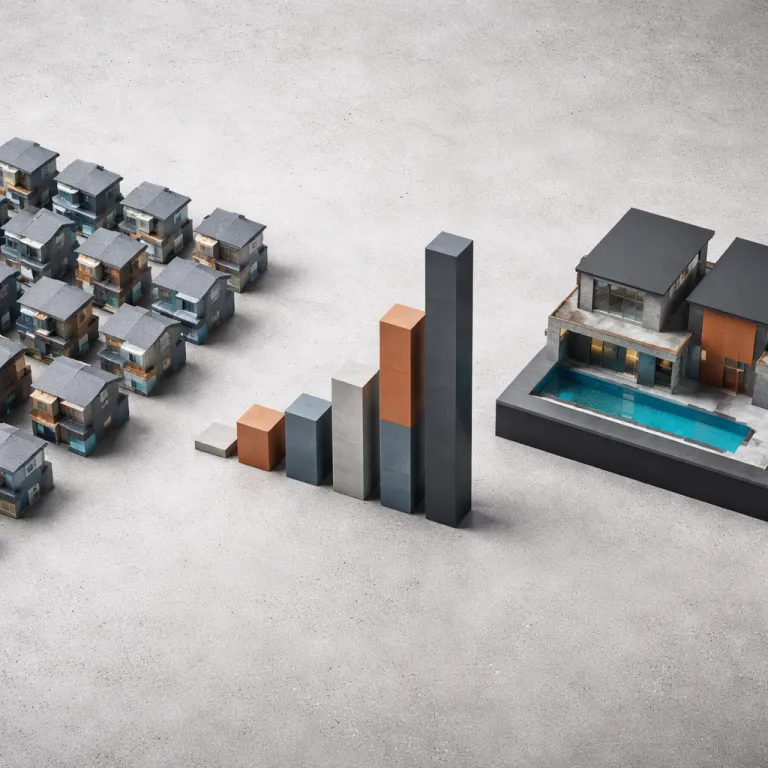
Luxury real estate market trends 2026 show a top tier that is decoupling from the broader housing market. While national United States luxury price forecasts from Coldwell Banker suggest roughly flat values with about 0.5 percent growth and around 5 percent inventory expansion, prime global luxury hubs are still posting gains between 5 and 12 percent as reported by Housing Wire. For estate owners this divergence means your personal estate market is now driven less by local housing cycles and more by the movements of wealthy buyers and ultra high net worth individuals across borders.
At the core of these luxury real estate market trends 2026 sit three structural drivers that matter more than interest rates. First is cash dominance, where luxury buyers and high net worth individuals often transact without leverage, insulating the luxury market from traditional credit tightening and creating a parallel estate market with its own pricing logic. Second is inherited wealth transfer, which channels capital into real estate and luxury homes as legacy assets, while the third driver is cross border migration that redirects global luxury demand into specific realty enclaves and reshapes estate trends in ways that standard housing market reports rarely capture.
For you as an estate owner, the practical question is how to read these luxury real estate market trends 2026 without being misled by headline news. National housing market data and every glossy outlook report tend to average together very different estate trends, masking what is happening in the true global luxury segment. You need granular insights on your asset type and location, whether that is a white modernist villa above Cape Town, a restored shingle style property on Cape Cod, or a glass penthouse in Los Angeles, because each sits in a distinct estate market with its own buyers, its own selling dynamics, and its own risk profile.
Structural drivers: cash, inheritance and cross border flows reshaping the estate market
Cash is now the primary language of the upper luxury market, and that reality defines luxury real estate market trends 2026 more than any central bank statement. In the United States, Coldwell Banker data shows luxury home spending rising by about 6 percent while the ultra high net worth cohort expands by roughly 18.5 percent, which means more worth individuals are competing for a finite pool of trophy homes and pushing estate trends away from traditional housing market cycles. In practice, this cash dominance allows luxury buyers to move quickly, set terms, and arbitrage regional price gaps between markets like Los Angeles, Miami, Dubai and Zurich.
The second structural driver is inheritance, where intergenerational transfers are quietly underwriting a new wave of luxury real acquisitions. For many wealthy buyers, a prime real estate holding is no longer just a lifestyle choice but a deliberate store of value that sits alongside private equity and art in their net worth calculations, and this is why the luxury market behaves differently from the mainstream estate market when volatility rises. These dynamics are especially visible in global luxury corridors such as Dubai, Singapore and Zurich, where international realty specialists report sustained inflows from families seeking both lifestyle and jurisdictional diversification.
The third driver is cross border migration, which is less about speculative capital and more about people actually relocating their lives. Housing Wire notes that prime global cities are still posting 5 to 12 percent gains even as broader housing slows, because international buyers are targeting specific neighbourhoods and asset types that match their tax, schooling and mobility needs. You see this in the way wealthy buyers from the United States and Europe are reshaping the housing market in Dubai and Singapore, while domestic and Latin American capital continues to support the high end in Miami where the five million dollar segment grew strongly on all cash buyers as analysed in this deep dive on Miami’s five million dollar segment, and together these flows create estate market pockets that can rise even when national market trends appear flat.
Regional scoreboard: where luxury real estate is actually gaining ground
Across the United States, luxury real estate market trends 2026 split into two distinct maps that every estate owner should track separately. Prime coastal and gateway cities such as Los Angeles, New York and Miami still command strong luxury buyers interest, yet their estate trends are now shaped by micro neighbourhoods, school districts and even access to wellness amenities like private gyms and cold plunge facilities rather than by citywide averages. At the same time, a new constellation of high performing secondary cities including Atlanta, San Diego, Nashville, Dallas, Salt Lake City and Minneapolis is stabilising as a serious luxury market according to The Market Capitalist, creating fresh options for portfolio rotation.
In Western Europe, luxury real estate market trends 2026 show a more nuanced picture where policy risk matters as much as demand. Paris, London and certain Alpine ski resorts still attract global luxury capital, but estate owners must weigh potential pied à terre taxes, foreign buyer restrictions and changing residency rules that can alter both net worth outcomes and exit liquidity. For buyers using international realty advisers, the key is to separate lifestyle driven acquisitions, such as a white stucco villa in the Balearics, from more yield focused real estate holdings in cities like Lisbon or Berlin, because each responds differently to regulatory news and macro shifts.
The Gulf and Asia tell a different story again, with Dubai, Singapore and Zurich emerging as the clearest beneficiaries of cross border migration and wealth relocation. Dubai’s housing market continues to attract global luxury interest thanks to favourable tax treatment and a deep pipeline of new homes, while Singapore’s tightly managed estate market offers stability that many worth individuals now prize over raw upside. For estate owners considering regulatory exposure in the United States, it is worth reviewing how licensing and compliance frameworks operate, even at the brokerage level, and resources such as this guide on navigating Washington State real estate licence renewal illustrate how governance and professional standards can influence both selling quality and long term estate market confidence.
Asset types: how waterfront, ski, urban and country estates behave in this cycle
Not all luxury homes respond to luxury real estate market trends 2026 in the same way, and asset type is now as important as geography. Waterfront properties from Cape Cod to the Côte d’Azur, from Cape Town to the Pacific coast near Los Angeles, continue to command a structural premium because they combine scarcity with lifestyle value that wealthy buyers rarely compromise on. Yet even within this segment, estate trends diverge between primary residences, second homes and pure investment holdings, and your strategy for selling or holding should reflect which category your property truly occupies.
Ski properties and mountain estates form another distinct micro market, where altitude, snow reliability and access to international airports drive pricing more than national housing market indicators. In the Alps and the Rockies, global luxury demand is concentrating around resorts with strong infrastructure and year round appeal, which supports both rental yields and long term capital values for high net worth individuals. Owners of these estates should monitor not only local market trends but also climate resilience data and infrastructure plans, because these factors increasingly shape the outlook report assumptions used by major realty firms and banks when valuing collateral.
Urban penthouses and country estates sit at opposite ends of the lifestyle spectrum yet both remain central to luxury real portfolios. In dense cities, glass walled penthouses with private terraces, concierge services and wellness amenities such as in unit cold plunge pools appeal to international buyers seeking secure bases in global hubs, while country estates with acreage, woodland and privacy attract families rebalancing their net worth into tangible assets. When you read any luxury outlook or estate market report from brands like Coldwell Banker, Sotheby International Realty or other global luxury specialists, focus on how they segment these asset types, because that segmentation often reveals more about future estate trends than the headline luxury market averages.
What the data misses: thin volumes, delayed medians and policy headwinds
Headline statistics in luxury real estate market trends 2026 can be misleading because the top of the estate market trades in very thin volumes. A handful of marquee sales in Los Angeles or on Cape Cod can shift reported medians by several percentage points, yet those numbers may not reflect the quiet negotiations happening just below the trophy tier where most wealthy buyers actually transact. For estate owners, this means you should treat every glossy outlook report as a starting point rather than a valuation bible, and insist on deal level insights from your advisers.
Another blind spot in many housing market reports is the lag between contract signing and public data, which can stretch for months in some jurisdictions. During that time, policy changes such as new foreign buyer rules, adjusted stamp duties or proposed pied à terre taxes can alter the real estate calculus for both domestic and international buyers, especially in Western Europe and certain North American cities. Estate trends at the top are therefore highly sensitive to regulatory news, and your net worth exposure should be managed with the same attention you give to tax or legal structuring in other parts of your portfolio.
Finally, there is the qualitative layer that no dataset fully captures, from architectural pedigree to view corridors to wellness infrastructure like private spas and cold plunge installations that now feature in many high end homes. These elements influence how global luxury buyers perceive value and how quickly a property moves when selling, even if they never appear in a formal estate market report. When you evaluate luxury real estate market trends 2026, ask your team to separate what is measurable from what is meaningful, because the latter often determines whether your estate attracts the right buyers at the right moment.
Positioning framework: hold, rotate, add or trim across your luxury portfolio
For an estate owner with multiple homes, the real task is turning luxury real estate market trends 2026 into a disciplined positioning framework. Start by mapping each property across three axes, namely region, asset type and role in your net worth strategy, then decide whether it belongs in a hold, rotate, add or trim bucket based on both current estate market conditions and your personal liquidity needs. A waterfront primary residence in a supply constrained area with strong global luxury demand is often a hold, while a non core pied à terre in a city facing new foreign buyer rules might be a candidate to trim before policy risk is fully priced in.
Rotation is most powerful when you move between segments that are on different parts of the cycle rather than simply chasing the latest housing market headlines. For example, some owners are quietly reallocating from overheated coastal condominiums into underappreciated secondary city estates where infrastructure, schools and cultural amenities are improving faster than prices, a pattern highlighted in several Coldwell Banker and other luxury market analyses. Others are adding exposure to stable jurisdictions like Singapore or Zurich through carefully selected real estate holdings, while trimming assets in markets where estate trends rely too heavily on speculative buyers rather than end users.
Throughout this process, use the work of established global luxury brands such as Coldwell Banker, Sotheby International Realty and other international realty networks as reference points, but anchor your decisions in your own objectives. A curated guide to what discerning buyers are actually paying for can be more useful than a broad luxury outlook when you are calibrating a specific sale or acquisition. The goal is not to time the estate market perfectly but to ensure that every property you hold, from Cape Cod to Los Angeles and beyond, earns its place in your portfolio either through lifestyle return, financial performance or both.
Working with the right partners: translating reports into real decisions
Luxury real estate market trends 2026 only become actionable when translated by advisers who understand both data and nuance. A strong international realty équipe will combine macro insights from sources such as Coldwell Banker, Housing Wire and other global luxury research with on the ground intelligence about specific streets, school catchments and even upcoming infrastructure that can shift estate trends. For estate owners, the priority is to build a small circle of trusted professionals who can interpret every outlook report through the lens of your personal net worth, risk tolerance and time horizon.
Brand names matter, but individual expertise matters more, whether you are working with a Coldwell Banker Global Luxury specialist, a Sotheby International Realty broker or a boutique realty firm with deep local roots. Ask how they integrate housing market data, policy news and buyer behaviour insights into their pricing and marketing strategies, and insist on seeing both successful selling case studies and examples where they advised clients not to transact because the estate market conditions were unfavourable. The best advisers will be candid about thin transaction volumes at the top, about the limitations of median price data, and about how wealthy buyers in your segment are actually behaving.
Finally, treat every luxury outlook, estate market report and housing market guide as one input among many rather than a script to follow. Your portfolio spans different regions, asset types and regulatory regimes, so no single report can capture the full picture of your exposure or opportunity set. By combining structured market trends analysis with a clear sense of your own priorities, you can navigate luxury real estate market trends 2026 with the same discipline you apply to other parts of your global balance sheet and ensure that each estate you own continues to justify its place in your life and in your long term strategy.
Key figures shaping the current luxury real estate landscape
- Coldwell Banker Global Luxury projects that United States luxury home prices will be roughly flat with about 0.5 percent growth while inventory expands by around 5 percent, indicating a more balanced but still resilient high end housing market compared with prior boom years.
- Housing Wire reports that prime global cities are registering price gains between 5 and 12 percent, which confirms that the top of the luxury market is operating on a different cycle from mainstream real estate segments that are seeing slower growth or mild declines.
- Coldwell Banker data shows luxury home spending in the United States rising by approximately 6 percent, while the ultra high net worth cohort has expanded by about 18.5 percent, underscoring how growth in wealthy buyers outpaces the supply of true trophy homes.
- New luxury hubs such as Atlanta, San Diego, Nashville, Dallas, Salt Lake City and Minneapolis are highlighted by The Market Capitalist as stabilising destinations for high net worth individuals, signalling that estate trends are broadening beyond traditional coastal gateways.
- International flows continue to favour Dubai, Singapore and Zurich as leading global luxury destinations, reflecting a combination of tax efficiency, political stability and lifestyle appeal that is increasingly important to cross border buyers and their advisers.
FAQ about positioning in the current luxury real estate cycle
How should I interpret flat national luxury price forecasts when my city is still rising ?
Flat national forecasts from sources like Coldwell Banker mask the fact that prime global and gateway cities can still post gains between 5 and 12 percent, so you should focus on hyper local data for your specific neighbourhood and asset type rather than relying on national medians that blend very different markets.
Is now a good time to sell a secondary luxury home in a non core city ?
If your secondary property sits in a market with rising inventory, modest demand and potential policy headwinds, it may be prudent to consider trimming that exposure and reallocating into stronger global luxury hubs or truly supply constrained locations, but the decision should be based on your liquidity needs and the property’s role in your overall net worth.
Which regions currently offer the most resilient demand from ultra high net worth buyers ?
Prime United States coastal cities, selected secondary hubs like Atlanta and San Diego, and international centres such as Dubai, Singapore and Zurich are all seeing sustained interest from ultra high net worth individuals who value both lifestyle and jurisdictional diversification.
How do policy changes like foreign buyer rules affect luxury estate values ?
New foreign buyer restrictions, higher stamp duties or proposed pied à terre taxes can reduce the pool of potential purchasers and lengthen selling timelines, especially in Western Europe and certain North American cities, so estate owners should monitor regulatory developments as closely as they track traditional housing market indicators.
What is the most effective way to use market reports and outlooks in my decision making ?
Treat every luxury outlook or estate market report as a framework rather than a forecast, then work with experienced international realty advisers to translate those broad trends into property specific strategies that reflect your time horizon, risk tolerance and lifestyle priorities.