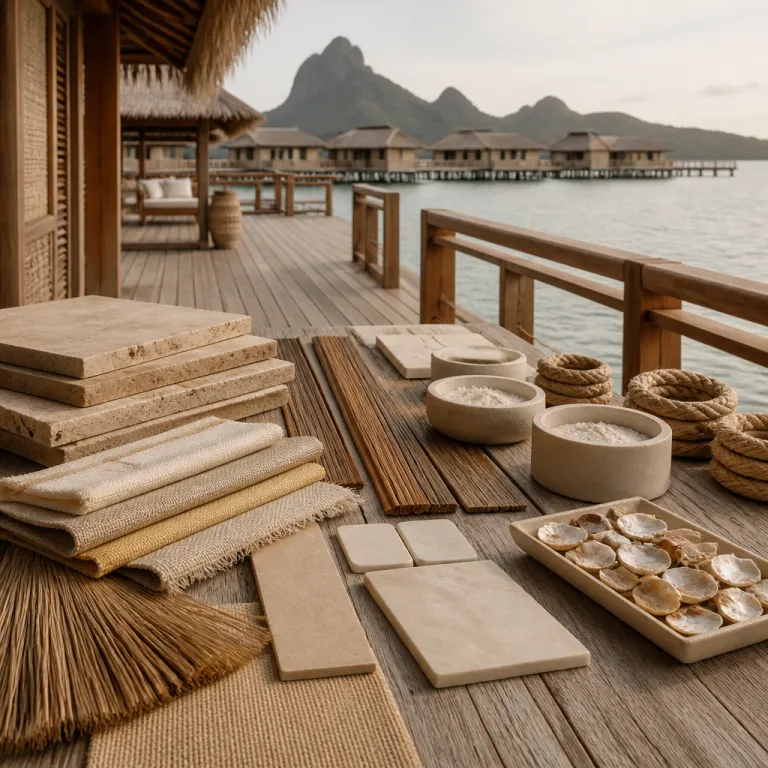

Why Bora Bora island houses anchor a resilient luxury portfolio
Bora Bora island houses occupy a rare intersection of scarcity and global desirability. For an exclusive estate owner, this specific Bora Bora real estate market combines limited buildable land, strict planning rules, and a protected lagoon setting that supports long term capital preservation. Each house or villa with a direct lagoon view effectively becomes a finite asset class within French Polynesia, particularly for buyers tracking Bora Bora waterfront villa price per m² in 2024 and beyond.
On the main island of Bora Bora, prime locations facing Mount Otemanu or the outer reef command a premium because they offer both panoramic views and natural protection from swells. A waterfront villa or overwater bungalow with a private deck above the lagoon typically trades at a higher price per square metre than inland properties; recent brokerage commentary from firms such as Sotheby’s International Realty French Polynesia and Poerava Luxury Real Estate cites prime listings in the EUR 18,000–25,000 per m² range for exceptional waterfront houses. Operating costs can be offset by carefully curated guests who pay for a high touch stay. When you structure the estate as a hybrid private residence and discreet hospitality asset, you can align personal enjoyment with a disciplined investment thesis.
In French Polynesia, foreign ownership rules, leasehold structures, and environmental regulations require meticulous legal and tax planning. A local French notary in Bora Bora and an avocat familiar with Polynesian customary land rights should review every detail of the title, easements, and access to the sand beach or white sand shoreline. Typical structures for foreign buyers include long term leasehold (bail emphytéotique), company ownership, or carefully documented indivision arrangements. This level of due diligence protects both the emotional value of your Bora Bora island houses and the financial integrity of your broader portfolio, especially for investors seeking French Polynesia leasehold property advice.
Selecting the right location and orientation on Bora Bora
Choosing the correct location for Bora Bora island houses is less about postcard clichés and more about micro geography. On Bora Bora, a ten minute boat ride can change wind exposure, reef protection, and the quality of the lagoon directly beneath your private deck or overwater bungalow. For an exclusive estate owner, these subtle shifts in location translate into very different guest experience profiles and long term maintenance costs.
The north and northwest sectors facing Mount Otemanu usually provide the most dramatic panoramic views, especially where the lagoon transitions from turquoise shallows to deep blue channels. A villa or bungalow positioned here can offer a private sunset ritual every evening, while still maintaining easy boat access to the outer reef for guests who want to explore coral gardens. On the eastern motu, by contrast, you may prioritise a longer sand beach or wider white sand frontage, accepting slightly stronger trade winds in exchange for cooler evenings and better natural ventilation.
When you evaluate a potential house site in French Polynesia, insist on visiting at different tides and times of day. Observe how the sun tracks across the pool, the outdoor kitchen, and each bedroom, and verify that the terraces remain usable during peak heat. For owners considering a more institutional approach to private island real estate, the acquisition frameworks described in the acquisition playbook for private island real estate apply directly to Bora Bora holdings, especially around access rights, service corridors, and long term erosion patterns.
Architectural typologies: villa, house, and overwater bungalow
Architectural choices for Bora Bora island houses fall broadly into three typologies that can be combined on a single estate. A primary villa on the main island, a cluster of guest bungalows on the sand beach, and one or two overwater bungalow suites on the lagoon can together create a flexible, multi generational compound. This mix allows you to host guests with very different expectations while preserving your own private wing.
The main villa or house typically carries the core infrastructure, including the professional kitchen, outdoor kitchen, staff quarters, and technical rooms for the pool and water filtration. Here, a traditional Polynesian roofline in timber and thatch can be paired with contemporary glass walls to frame the view of Mount Otemanu without sacrificing cross ventilation. On the lagoon side, freestanding bungalows with private decks can be oriented so that guests enjoy both sunrise and private sunset moments, while still maintaining visual separation from the owner’s residence.
Overwater bungalow suites demand particular structural attention because the marine environment accelerates wear on piles and platforms. When you explore Bora Bora options, insist on engineering reports that detail pile materials, anti corrosion treatments, and access for future maintenance beneath each private deck. For inspiration on how island compounds can balance seclusion, guest circulation, and water access, many owners study Caribbean havens profiled in analyses such as the one on the allure of Caribbean havens, then adapt those principles to the specific constraints of French Polynesia.
Designing the guest journey: from arrival to private sunset
For Bora Bora island houses, the most valuable amenity is often the orchestrated experience rather than any single object. From the moment guests step off the boat onto the sand beach or arrival pontoon, every transition should frame a new view of the lagoon, the villa, or Mount Otemanu. This choreography turns a simple stay into an experience Bora Bora travellers remember and actively recommend.
Begin with a shaded arrival pavilion that opens toward the main house and the water, allowing guests to enjoy a first glimpse of the pool and the white sand shoreline. A gently rising path can lead through tropical planting to the central living pavilion, where sliding walls disappear to reveal panoramic views across the lagoon and toward Mount Otemanu. From here, discreet pathways branch to each bedroom suite, to the overwater bungalow, and to the outdoor kitchen and dining deck, ensuring that service flows remain invisible while guests enjoy uninterrupted privacy.
Thoughtful lighting extends this experience into the evening, when the lagoon becomes a dark mirror and the villa glows softly above it. Underwater lights beneath each private deck can attract fish without disturbing the natural rhythms of the water, while low level path lighting guides guests safely between the bungalow, the pool, and the main house. The day should culminate in a curated private sunset ritual on the sand beach or overwater terrace, where you can host a small group of guests or retreat alone to experience Bora Bora at its quietest.
Operational strategy for a hybrid private residence and guest estate
Many owners of Bora Bora island houses now operate their estates as invitation only retreats when they are not in residence. This hybrid model allows you to offset running costs for the villa, bungalow suites, and overwater bungalow while maintaining full control over who stays and how the property is used. The key is to design both the architecture and the service model around flexible zoning and clear operational boundaries.
In practice, this means creating a clearly defined owner’s wing in the main house, with separate access to the pool and outdoor kitchen, while guest suites and bungalows are grouped around their own sand beach or white sand cove. Smart locks and discreet service corridors allow staff to move between the kitchen, laundry, and technical rooms without crossing guest sightlines, preserving the sense of a private Bora Bora retreat. When guests enjoy the lagoon, the waterfront platforms, and the private deck spaces, they should feel as if the entire estate has been designed solely for their stay.
Revenue management for such an estate in French Polynesia requires careful calibration of minimum stay lengths, seasonal pricing, and ancillary offer design. Curated experiences such as guided outings to explore coral gardens, private sunset cruises around Bora Bora, or chef led traditional Polynesian dinners on the beach can significantly increase per stay revenue without increasing bedroom count. For a deeper framework on how to position such assets within a global portfolio of waterfront holdings, many owners consult analyses of waterview living that elevates every oceanfront estate and adapt those principles to the regulatory and cultural context of French Polynesia.
Risk management, sustainability, and long term value protection
Owning Bora Bora island houses entails a responsibility to both the environment and your capital. The lagoon, the sand beach, and the reef that make Bora Bora private estates so desirable are also fragile systems that can be damaged by careless development. A long term owner therefore treats sustainability as a core risk management tool rather than a marketing add on, integrating it directly into daily operations and maintenance planning.
Start with construction materials and techniques that respect traditional Polynesian knowledge while meeting modern engineering standards. Elevated structures above the water reduce direct impact on marine life, while permeable pathways behind the beach help preserve natural sand movement and protect the white sand frontage. Rainwater harvesting, solar arrays discreetly integrated into the villa roof, and high efficiency pool systems reduce operating costs and the estate’s footprint, supporting both resilience and guest expectations for responsible luxury.
Regular environmental audits of the lagoon, the sand beach, and vegetation around the house or bungalow can identify early signs of erosion or reef stress. When you explore Bora Bora for expansion or redevelopment, prioritise sites where you can restore native planting, improve water quality, and create shaded corridors that reduce cooling loads in each bedroom and living pavilion. Over time, such measures not only protect the view and the experience Bora Bora offers, they also enhance the asset’s appeal to a new generation of guests who value authenticity, privacy, and stewardship in French Polynesia.
Key figures shaping investment decisions in Bora Bora island houses
- According to the Institut de la Statistique de la Polynésie française (ISPF), international tourist arrivals to French Polynesia reached approximately 236,000 visitors in 2023, with Bora Bora capturing a significant share of high spending guests seeking lagoon front villas and overwater bungalow stays.
- Market commentary from leading brokerage firms indicates that prime waterfront house and villa transactions in Bora Bora can reach very high prices per square metre, with recent public listings in 2023–2024 showing asking prices above EUR 20,000 per m² for exceptional properties with unobstructed panoramic views of Mount Otemanu and the lagoon.
- Data published by Tahiti Tourisme in its 2023 tourism statistics report show that the average length of stay in French Polynesia typically hovers around 10 to 12 nights, which supports a pricing strategy focused on longer, experience rich bookings rather than high turnover of short stays.
- Environmental studies commissioned by the government of French Polynesia, including coastal management reports for Bora Bora, highlight that coral reef health is strongly correlated with controlled coastal development, reinforcing the financial case for low density private estates with carefully managed sand beach and lagoon structures.
FAQ about Bora Bora island houses for exclusive estate owners
What distinguishes Bora Bora island houses from other tropical estates ?
Bora Bora island houses combine a uniquely protected lagoon, dramatic views of Mount Otemanu, and strict planning rules that limit density. This combination creates a scarcity premium that many Caribbean or Indian Ocean markets cannot replicate. For an exclusive estate owner, the blend of privacy, service quality, and environmental beauty in French Polynesia is particularly compelling.
Is it possible for foreign buyers to own property in Bora Bora ?
Foreign buyers can own property in Bora Bora and more broadly in French Polynesia, but many transactions involve complex leasehold or co ownership structures. Working with a French notary in Bora Bora and legal counsel experienced in Polynesian customary land rights is essential. Proper structuring at acquisition protects both usage rights and future resale options.
How many bedrooms and bungalows should a hybrid private estate include ?
For a family led estate that occasionally hosts paying guests, a common configuration is a three or four bedroom main villa plus two to four guest bungalows and one overwater bungalow suite. This layout allows you to host up to 10 or 12 guests comfortably while preserving a fully private wing for the owner. The exact mix depends on the site’s sand beach frontage, lagoon depth, and service access.
What are typical operating costs for Bora Bora island houses ?
Operating costs vary widely depending on the size of the villa, the number of pools, and the level of staffing. As a broad indication, many high end estates in French Polynesia allocate a low single digit percentage of asset value annually to maintenance, utilities, and staff, excluding financing. Careful design of energy systems, water treatment, and service circulation can significantly reduce these recurring expenses.
How can I ensure my Bora estate remains environmentally responsible ?
Environmental responsibility begins with site selection and continues through design, construction, and daily operations. Prioritise elevated structures, native planting, efficient pool and water systems, and limited artificial lighting over the lagoon and sand beach. Regular environmental assessments and collaboration with local conservation groups help ensure that your Bora Bora private estate protects the very lagoon and reef that underpin its long term value.
References
- Tahiti Tourisme – official tourism statistics for French Polynesia, including 2022–2023 visitor reports
- Institut de la Statistique de la Polynésie française (ISPF) – economic and demographic data on arrivals and accommodation capacity
- Government of French Polynesia – environmental and coastal management reports for Bora Bora and surrounding islands