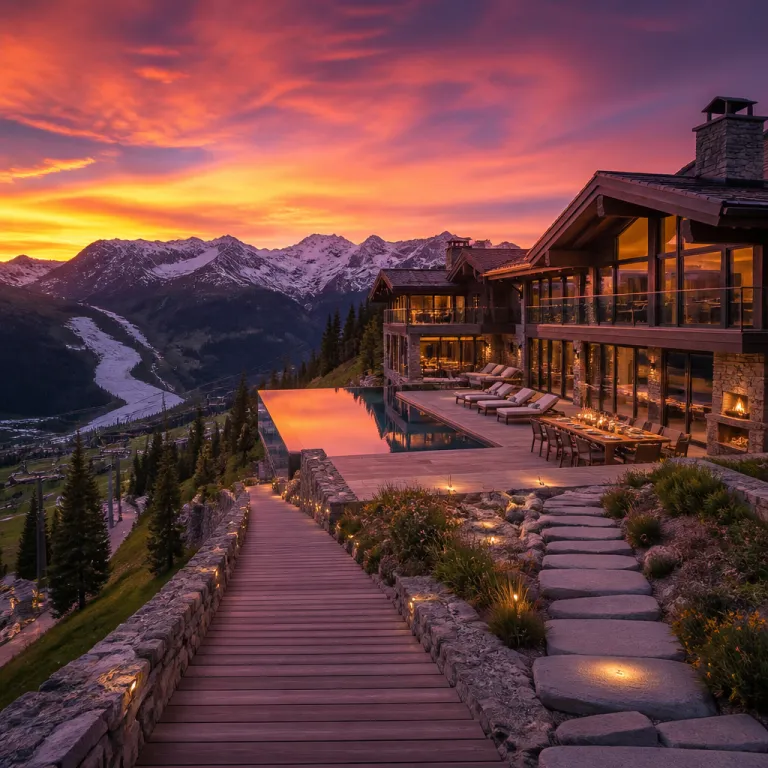
The new economics of mountain retreat luxury property
Mountain retreat luxury property has shifted from seasonal indulgence to strategic allocation. For ultra high net worth owners, mountain living now underpins portfolio resilience, lifestyle flexibility, and intergenerational planning in ways coastal luxury properties no longer fully match. A mountain retreat that once felt like discretionary real estate now behaves as core estate infrastructure for year round use.
Across the Rocky Mountain corridor, from Aspen and Telluride in Colorado to Jackson Hole in Wyoming, luxury markets are pricing in a structural change in demand. Remote work permanence, wellness driven migration, and climate related heat aversion are transforming these retreats into primary homes and not just short term escapes. That shift is visible in tighter inventory, firmer pricing through shoulder seasons, and a premium for properties designed for true year round living rather than winter entertaining only.
Historically, a mountain retreat was valued around ski weeks, holiday gatherings, and a narrow rental window. Today, buyers evaluate a mountain retreat luxury property on its capacity to support continuous occupancy, flexible term rental strategies, and multi generational gathering spaces that function as both private sanctuary and social hub. The result is a new hierarchy of value where altitude, access, and infrastructure matter as much as ski in ski out cachet.
From seasonal chalet to operational base
In this context, the best class mountain retreat is less about rustic charm and more about operational robustness. Owners want luxury mountain homes with resilient utilities, redundant connectivity, and spaces that allow seamless transitions between work, wellness, and entertaining. A well positioned property now needs to deliver a credible year round experience, not just a photogenic winter postcard.
That means larger heated garages, gear rooms, and flexible suites that can convert from guest bedrooms to staff quarters or consulting rooms. It also means outdoor spaces designed for all seasons, with covered terraces, radiant heated patios, and gathering zones that work in snow, shoulder season rain, and high summer sun. The mountain retreat that performs as an operational base will hold value better than a purely romantic cabin, especially in constrained luxury markets.
For owners with multi country portfolios, this evolution reframes the role of each mountain property. Instead of a single large chalet, some are assembling a network of smaller luxury properties in different mountain, national, and coastal regions, balancing climate, tax, and access. In that matrix, each estate must justify its place not only emotionally but also in terms of liquidity, term rental potential, and long term capital preservation.
The altitude premium: privacy, climate, and risk pricing
Elevation has always carried a certain mystique, but the altitude premium is now quantifiable. Cooler summers, lower humidity, and natural privacy are being priced into mountain retreat luxury property in a way that coastal buyers will recognize from their own markets. In many Rocky Mountain enclaves, the delta between valley floor and high ridge pricing has widened as buyers chase both views and climate resilience.
At higher elevations, luxury mountain homes benefit from reduced exposure to extreme heat events that increasingly affect low lying cities. For owners used to oceanfront estate holdings, the mountain retreat offers a complementary climate hedge, with fewer storm surge risks and different wildfire profiles than coastal brush zones. That diversification is particularly relevant when your estate already includes waterview living that elevates every oceanfront estate in more volatile regions.
Privacy is another driver of the altitude premium, especially for public figures and family offices. A private road, a controlled access park like setting, and natural topography that shields outdoor spaces from view can be worth more than an extra 100 square meters of indoor spaces. In practice, this means that a 600 square meter property with exceptional seclusion can trade above a larger 800 square meter home in a busier resort core.
Wildfire, water, and insurance dynamics
Risk pricing in mountain living is nuanced and highly local. Some high elevation zones enjoy better wildfire defensibility due to rock outcrops, natural fire breaks, and proactive forest management, while others face increased exposure from dense tree cover and limited access roads. Insurers are differentiating sharply between these micro locations, and that is feeding directly into luxury real estate valuations.
Water security is another underappreciated component of the altitude premium. Properties with reliable wells, rights to local water systems, or proximity to resilient municipal infrastructure will outperform isolated estates that rely on fragile legacy systems. When you evaluate a mountain retreat luxury property, you should weigh these infrastructure realities as heavily as soaring ceilings or spa level suites.
Owners who already manage complex coastal portfolios understand how quickly insurance terms can shift. The same discipline now applies in the mountains, where a rare opportunity in a visually spectacular setting may carry hidden long term costs if access roads, fire services, or water systems lag behind demand. A disciplined buyer treats these factors as core underwriting criteria, not afterthoughts.
Supply constraints: why the right mountain retreat rarely comes back
Mountain retreat luxury property is defined as much by what cannot be built as by what already exists. Terrain, zoning, environmental protections, and national park boundaries create hard limits on new supply in a way that many coastal markets do not face. Once a prime ridge line or valley floor is fully entitled, the pipeline of future luxury properties is effectively capped.
In Colorado, for example, the interplay between county level planning, conservation easements, and proximity to mountain national park lands sharply restricts greenfield development. That means existing luxury mountain homes near protected areas often behave like quasi trophy assets, with fewer direct comparables and longer holding periods. When such an estate comes to sale, it is less a routine listing and more a rare opportunity to secure a position that may not be replicable within your investment horizon.
Topography also limits the number of sites that can support large, flat pads for modern architecture with expansive outdoor entertaining terraces. Steep slopes, avalanche paths, and view corridor regulations all reduce the pool of buildable plots that can host best class designs with spaces that enable seamless transitions between interior and exterior. As a result, the most compelling gathering spaces at altitude are often found in older properties that have been meticulously reimagined rather than in new builds.
Permitting friction and build cost premiums
Permitting in sensitive mountain environments is slow, political, and increasingly climate driven. Environmental impact studies, wildlife corridor protections, and community resistance to perceived overbuilding can stretch timelines far beyond what you may be used to in urban luxury markets. For an ultra high net worth investor, time to delivery is now a central variable in the decision between acquiring an existing estate and pursuing a ground up project.
Construction at elevation carries structural cost premiums that are not always obvious from headline per square meter figures. Logistics, weather delays, specialized trades, and stricter engineering for snow loads and slope stability can add roughly 20 to 40 percent to build costs compared with lowland projects of similar size. This range is consistent with estimates cited in construction cost reports from major quantity surveying firms that track mountain resort development.
In markets like Aspen, Telluride, and Jackson Hole, this friction between constrained supply and expanding demand is rewriting the seasonal playbook. Instead of sharp off season discounts, you see a narrower pricing band throughout the year, with only marginal softening in shoulder months. For owners used to timing coastal acquisitions around market lulls, mountain retreat luxury property now demands a more opportunistic, long term approach.
Global altitude markets: Colorado to the Alps and beyond
Mountain retreat luxury property is no longer a purely North American story. European alpine markets such as Verbier, Gstaad, Chamonix, and Kitzbühel offer a different blend of lifestyle, regulation, and ownership structures that appeal to globally mobile families. These markets often combine centuries old mountain living traditions with modern infrastructure and sophisticated hospitality ecosystems.
In North America, the Rocky Mountain arc from Colorado through Utah to British Columbia remains the primary focus for U.S. based ultra high net worth investors. Aspen, Vail, Telluride, Park City, and Whistler each present distinct luxury markets, with varying attitudes toward short term and longer term rental activity, foreign ownership, and development density. The common thread is a shift toward year round activation, with summer festivals, wellness programming, and outdoor sports extending the season well beyond winter.
By contrast, many European resorts still orient their economic model around winter, even as they invest in hiking, biking, and cultural programming. Ownership structures can be more complex, with restrictions on non resident purchases, caps on term rental activity, and intricate inheritance regimes. For a U.S. based family office, that means a European mountain retreat may function more as a lifestyle anchor than as a flexible yield asset.
Comparing returns and risk profiles
North American mountain retreat luxury property tends to offer more straightforward title structures and clearer paths to value add repositioning. You can often reconfigure suites, expand gathering spaces, or add wellness amenities such as pools and saunas with fewer legal constraints than in tightly regulated European villages. That flexibility can translate into higher potential upside, especially when combined with thoughtful design and strong operating management.
European alpine estates, however, often benefit from deeper historical scarcity and more entrenched brand equity. A chalet in the heart of Zermatt or Courchevel carries a cultural cachet that is difficult to replicate, and that intangible value supports long term capital preservation. For globally diversified portfolios, pairing a flexible North American mountain retreat with a more static European estate can balance yield and stability.
Owners who already hold hill country or wine region properties, such as captivating residences with hill country views in Texas, often find that mountain living completes a climatic and experiential triangle. Coastal, rural lowland, and high altitude estates each respond differently to macroeconomic shocks, regulatory shifts, and climate pressures. The art lies in calibrating exposure so that no single geography dominates your real estate risk profile.
Designing for year-round mountain living: from suites to spaces seamless
The architecture of mountain retreat luxury property has evolved decisively away from dark timber lodges. Today’s best class estates favor modern lines, generous glazing, and a palette that balances warmth with clarity. The goal is to frame the mountain, not compete with it, while still delivering deeply comfortable living for extended stays.
Interiors are increasingly organized around flexible gathering spaces rather than formal rooms. Large great rooms with soaring ceilings, anchored by sculptural fireplaces, flow into dining zones and professional grade kitchens, creating spaces that support seamless transitions for entertaining and daily life. Private bedroom suites are often clustered in separate wings, allowing multi generational families or guests to maintain autonomy while sharing common areas.
Outdoor spaces have become as critical as indoor square meters. Covered terraces with integrated heating, outdoor kitchens, and spa decks extend the usable footprint of the property across all seasons. In the most successful designs, circulation between indoor and outdoor zones feels intuitive, with minimal level changes and carefully framed views that make even a brief walk to the hot tub an experience rather than a chore.
Programming the home for work, wellness, and hosting
Year round mountain living demands a different program than a holiday focused chalet. Dedicated workspaces with robust connectivity, acoustic privacy, and natural light are now non negotiable for many owners. These spaces often double as libraries or media rooms, ensuring they remain valuable even when not used for work.
Wellness infrastructure is another defining feature of contemporary luxury mountain homes. Cold plunge pools, infrared saunas, yoga studios, and treatment rooms are increasingly standard in top tier estates, reflecting a shift from indulgence to longevity focused living. When these amenities are integrated near outdoor spaces, they create a daily ritual that ties the resident more closely to the landscape.
Hosting remains central, but the nature of entertaining has changed. Instead of a few large seasonal parties, owners now host smaller, more frequent gatherings throughout the year, from investor offsites to extended family stays. That pattern favors kitchens designed for professional catering, secondary prep spaces, and discreet staff circulation that keeps operations invisible while maintaining a relaxed, residential atmosphere.
Practical evaluation: what to underwrite beyond the view
Evaluating a mountain retreat luxury property requires a more forensic approach than many coastal acquisitions. Altitude, access, medical infrastructure, and build quality at elevation all carry real implications for safety, liquidity, and long term operating costs. A spectacular view is only the starting point, not the investment thesis.
Accessibility in all seasons is paramount. You should analyze road gradients, snow removal responsibilities, and proximity to airports capable of handling private aviation, not just commercial flights. A property that feels charmingly remote in summer can become functionally isolated in winter if access roads are steep, shaded, or poorly maintained.
Medical infrastructure is another non negotiable factor, especially for multi generational use. Distance to the nearest hospital with emergency capabilities, availability of specialist care, and reliability of air ambulance services all matter when you plan to spend extended periods at altitude. For older family members or guests, these considerations can be the difference between a beloved retreat and an underused asset.
Build quality, systems, and operational resilience
Construction at elevation punishes shortcuts. You should commission detailed inspections of building envelopes, insulation, window systems, and mechanical equipment, with particular attention to how the property handles freeze thaw cycles. Poor detailing around roofs, decks, and retaining walls can lead to accelerated deterioration and costly remediation.
Energy systems deserve special scrutiny in mountain living. High performance glazing, efficient boilers or heat pumps, and intelligent controls can materially reduce operating costs and improve comfort, especially in large estates with extensive glazing and soaring ceilings. Backup power, redundant heating sources, and robust water systems are not luxuries but essential components of a resilient mountain retreat.
Operationally, you should treat a mountain retreat luxury property more like a small hotel than a simple second home. Staff housing, service access, storage for equipment, and clear maintenance protocols will determine how enjoyable the estate is to use over time. A beautifully designed home that is exhausting to operate will underperform both as a lifestyle asset and as part of a broader real estate portfolio.
Yield, usage, and the new role of term rental
The rise of year round demand has transformed the economics of short term and longer term rental in mountain markets. Where once you might have relied on a few peak weeks to offset carrying costs, you can now structure more nuanced occupancy strategies that balance personal use, family access, and income generation. The key is aligning your property’s design and location with the type of guests you actually want.
In many luxury markets, regulatory frameworks around term rental are tightening, especially in resort cores. Some jurisdictions cap the number of nights per year, while others restrict short term rental activity to specific zones or building types. Before you acquire a mountain retreat luxury property with yield in mind, you must map the current rules and the political trajectory, not just the historical performance.
Properties with multiple suites, independent guest houses, and flexible gathering spaces tend to perform better in the high end rental segment. They can host extended families, corporate retreats, or wellness groups without compromising privacy or comfort. At the same time, estates that feel too much like commercial venues may face community resistance or stricter oversight, so the design language must remain authentically residential.
Integrating yield into a lifestyle first strategy
For ultra high net worth owners, yield is rarely the primary driver of a mountain acquisition. The more relevant question is how rental activity can support staff retention, property upkeep, and community integration without eroding the retreat’s sense of sanctuary. A carefully calibrated rental program can keep the home activated, maintain service standards, and build goodwill with local partners.
Year round demand also allows for more creative usage patterns. Some owners block out key family periods, open the estate for select short term stays during peak festival or ski weeks, and then offer longer term rental arrangements to trusted tenants in shoulder seasons. This approach can smooth cash flow, reduce wear and tear from constant turnover, and align occupancy with the property’s natural rhythms.
Ultimately, the most successful mountain retreat luxury property strategies treat yield as one of several performance metrics. Capital preservation, lifestyle value, intergenerational utility, and portfolio diversification all sit alongside income in the decision matrix. When those elements are balanced thoughtfully, the mountain retreat becomes not just another line item in your real estate holdings, but a quietly compounding asset in both financial and human terms.
Key statistics shaping mountain retreat luxury property
- According to the National Association of Realtors 2021 and 2022 Vacation and Second Home reports, vacation home purchases in mountain and rural areas rose by roughly 15 to 20 percent between 2019 and 2021, reflecting a structural shift toward remote friendly living rather than purely seasonal usage. Exact percentages vary by year and submarket, but the upward trend is consistent across several NAR second home analyses.
- In prime Rocky Mountain resorts such as Aspen and Jackson Hole, local MLS data and brokerage market reports from 2022–2023 show inventory for luxury homes above approximately 465 square meters (around 5,000 square feet) often running at four to six months of supply or less. Market snapshots cited in the Savills World Research 2023 Prime Residential report and the Knight Frank Wealth Report 2023 broadly corroborate this tight inventory environment.
- Studies summarized in the Fourth National Climate Assessment (U.S. Global Change Research Program, 2018) and follow on western U.S. climate briefs indicate that many high elevation regions have experienced smaller increases in average summer temperatures than numerous lowland cities, reinforcing the climate hedge value of mountain living within diversified property portfolios.
- Construction cost analyses from international quantity surveying firms, including Turner & Townsend’s International Construction Market Survey 2022 and 2023, show that building at altitude can carry a 20 to 40 percent premium over comparable lowland projects, due to logistics, weather delays, and specialized engineering requirements. These premiums are particularly evident in remote or high snow load locations.
- Tourism board statistics and resort operator reports for destinations such as Vail, Whistler, and Chamonix indicate that non winter visitation now accounts for roughly 45 to 55 percent of annual tourist nights in several key resorts, confirming the rise of year round demand that underpins the new economics of mountain retreat luxury property.
FAQ about mountain retreat luxury property
How is year-round demand changing pricing in mountain luxury markets ?
Year round demand is flattening the traditional seasonal pricing curve in many mountain luxury markets. Instead of sharp discounts in spring and autumn, prices now remain relatively firm throughout the year, with only modest softening in shoulder seasons. This shift reflects remote work, wellness migration, and climate driven relocation, all of which support more continuous occupancy.
What should I prioritize when evaluating a mountain retreat beyond the view ?
Beyond the view, you should prioritize access, infrastructure, and build quality. Year round road reliability, proximity to medical services, and robust utilities are critical for safety and usability. At the property level, focus on envelope performance, mechanical systems, and functional layouts that support both daily living and hosting.
How do North American and European mountain luxury properties differ as investments ?
North American mountain properties typically offer simpler ownership structures, more flexible renovation options, and clearer paths to integrating rental income. European alpine estates often provide deeper historical scarcity and strong brand equity but may face stricter regulations on foreign ownership and term rental activity. Many global investors hold both, using North America for flexibility and Europe for long term capital preservation.
Can a mountain retreat realistically generate meaningful rental income ?
Yes, a well located mountain retreat with appropriate design and amenities can generate meaningful rental income, especially in markets with strong year round tourism. Success depends on local regulations, property configuration, and professional management. Multi suite layouts, generous gathering spaces, and high quality services tend to perform best in the upper tier rental segment.
How does a mountain retreat fit into a diversified luxury real estate portfolio ?
A mountain retreat complements coastal and urban holdings by adding climate diversification, alternative risk exposure, and a different pattern of usage. High elevation estates can act as both lifestyle anchors and strategic hedges against heat, storm, and regulatory risks in other markets. When selected and managed carefully, they enhance both the experiential and financial resilience of a global property portfolio.
Sources : National Association of Realtors 2021–2022 Vacation and Second Home reports ; Savills World Research 2023 Prime Residential report ; Knight Frank Wealth Report 2023 ; U.S. Global Change Research Program Fourth National Climate Assessment (2018) ; Turner & Townsend International Construction Market Survey 2022–2023.