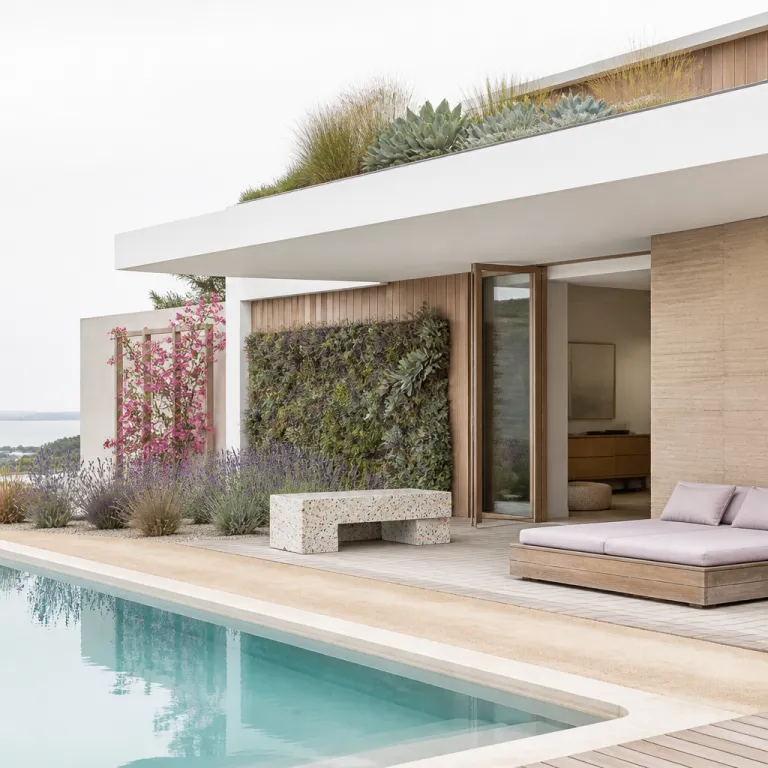
The new language of luxury: from sustainable to regenerative
In the upper tier of residential design, the conversation has shifted from polite sustainability to unapologetically regenerative intent. Regenerative sustainable luxury home construction now signals that a house is not only lowering its footprint but actively repairing the surrounding environment and social fabric. For exclusive estate owners, this is no longer an eccentric preference ; it is becoming a quiet but decisive marker of taste, status, and future liquidity.
At the material level, the pivot is stark, because the most forward thinking architects builders are specifying hempcrete, rammed earth, bamboo composites, and reclaimed hardwoods where marble and tropical stone once dominated. This is not a downgrade in luxury living but a redefinition of what intelligent building design looks like when you care about long term health, resilience, and capital preservation. The architect who chooses hempcrete over marble is making a statement about where luxury is heading, not where it has been.
Regenerative sustainable luxury home construction treats every home as a living system rather than a static object. Walls, roofs, and landscapes are designed as integrated systems that manage water, harvest renewable energy, filter air, and support biodiversity in ways that conventional buildings never attempted. In this model, homes designed for longevity become net positive assets for both the environment and the balance sheet.
The material intelligence argument is simple but radical, because true luxury now lies in knowing which natural materials sequester carbon, regulate humidity, and age gracefully under coastal sun or desert wind. A regenerative home in Malibu with hempcrete walls, timber from certified forests, and lime plasters is not a rustic retreat ; it is a calibrated piece of regenerative architecture tuned to marine air, seismic risk, and long term sustainability. The same logic applies to buildings in Aspen, the Hamptons, or Lake Tahoe, where sustainable design now means specifying materials that work with the climate rather than fighting it with oversized mechanical systems.
Owners who commission homes designed with regenerative design principles are also buying a hedge against regulatory and market shifts. As building codes tighten around energy efficiency, embodied carbon, and water use, regenerative home construction quietly future proofs assets that would otherwise require expensive retrofits. In practice, that means regenerative sustainable luxury home construction is less about virtue signaling and more about disciplined risk management for high value properties.
Material choices now sit alongside location and tax jurisdiction as core strategic decisions for serious portfolios. A house in a prime enclave that ignores sustainability and regenerative architecture will increasingly feel like a stranded asset, no matter how impressive its catalogue finishes. By contrast, creating homes that are environmentally responsible, materially intelligent, and net positive in performance is already reading as the more sophisticated move among globally mobile families.
Material intelligence: hempcrete, earth, bamboo and the new palette of wealth
Walk a new build in Costa Rica’s Papagayo Peninsula or Portugal’s Comporta coast and you will see the new palette of regenerative sustainable luxury home construction in the walls and floors. Hempcrete blocks, rammed earth walls, bamboo composites, and reclaimed teak are no longer experimental ; they are the quiet language of owners who understand that materials are strategy, not decoration. In this tier, sustainable design is judged by performance over decades, not by a plaque in the entry hall.
Hempcrete is a good example, because this regenerative material combines hemp shiv with lime to create a breathable, carbon storing envelope that stabilizes interior temperature and humidity. In a large home design on a humid coastline, that translates into better health outcomes, fewer mold issues, and lower energy water loads on mechanical systems. When paired with solar design that shades glazing and optimizes winter gain, hempcrete walls can materially improve energy efficiency without sacrificing the clean lines that contemporary architecture demands.
Rammed earth is playing a similar role in desert and Mediterranean climates, where its thermal mass and natural pigments create spaces innovative enough for gallery level art yet grounded in the local environment. A regenerative home in Scottsdale or Ibiza that uses rammed earth for primary buildings can maintain stable interior temperatures with minimal active cooling, especially when combined with solar wind cross ventilation strategies. Owners get architecture that feels carved from the landscape while quietly reducing energy consumption and long term operating costs.
Bamboo composites and responsibly sourced hardwoods are reshaping what luxury living underfoot looks like. In regenerative sustainable luxury home construction, bamboo floors, staircases, and exterior cladding offer rapid renewability, high strength, and a warm tactile quality that many owners now prefer to cold stone. When these materials are designed into biophilic design schemes with generous daylight, framed views, and indoor planting, the result is a home where materials, health, and sustainability are inseparable.
Landscape is part of the same material intelligence conversation, especially for estates with significant acreage. Owners who are already exploring permaculture landscaping as the new status symbol for exclusive estates are discovering that soil, native plants, and water systems are as critical as walls and roofs. Integrating regenerative design in the grounds with the architectural envelope creates homes designed as complete ecosystems rather than isolated buildings.
The smartest architects builders now treat every specification as a financial and ecological decision, not just an aesthetic one. They are creating homes where regenerative architecture, renewable energy infrastructure, and low impact materials work together as a single construction narrative. For you as an owner, the question is no longer whether these materials are luxurious enough, but whether a house that ignores them can still credibly claim to be a serious asset in the future.
Performance, durability and resale: will regenerative choices age well ?
Every serious owner eventually asks the same question about regenerative sustainable luxury home construction. Are these regenerative materials and systems genuinely superior for high value buildings, or are they a premium trend that will age poorly in both aesthetics and structural terms ? The only honest answer is that performance depends on design quality, execution, and climate fit, not on whether a material is traditional or regenerative.
Durability concerns around hempcrete, bamboo, or rammed earth usually come from projects where building design was value engineered or contractors lacked experience. In well executed homes designed by teams who understand regenerative design, these materials can outperform conventional assemblies in moisture management, thermal stability, and occupant health. For example, a hempcrete and timber house in a damp New England setting can maintain drier walls and more stable interior humidity than a standard cavity wall building, provided detailing and water management systems are correctly designed.
Resale is the other major concern, especially for properties in the 20 million dollar plus bracket where buyer pools are thinner. Early data from certified green luxury buildings in markets such as Los Angeles, London, and Sydney suggests a resale premium and faster absorption for homes that combine strong architecture with verifiable sustainability credentials. That premium is not just about lower energy bills ; it reflects buyer confidence that these homes are future ready in a regulatory and environmental sense.
In practice, regenerative sustainable luxury home construction can protect value when it is legible, documented, and aligned with recognizable standards. A regenerative home that integrates renewable energy, high performance envelopes, and biophilic design, and that can demonstrate energy efficiency and water savings, is easier to underwrite for both buyers and lenders. By contrast, a house with idiosyncratic eco features but no coherent systems narrative may confuse the market and dampen resale enthusiasm.
Owners should also think about brand alignment, because regenerative architecture is increasingly intersecting with branded residences and hospitality level services. In prime urban and resort markets, the most interesting branded eco mansions are already pioneering environmental luxury with serious technical depth rather than surface gestures. Aligning your construction choices with this emerging cohort can position your property alongside the green giants that are quietly setting the next benchmark.
The counter argument that regenerative materials are untested or risky is losing force as more high end projects complete and perform. What remains true is that execution risk is real, and you mitigate it by hiring architects builders with a track record in regenerative design, not generalists learning on your dime. If you treat regenerative sustainable luxury home construction as a disciplined investment in performance, not a lifestyle experiment, the resale question starts to look less like a risk and more like an upside.
Specifying for a 20M+ build: how to brief your team
For an exclusive estate owner, the critical move is not buying a catalogue of green products. The real leverage lies in how you brief your architects builders, structure performance targets, and align every design decision with a regenerative sustainable luxury home construction roadmap. That roadmap should treat the home as a long term operating asset, not a static object frozen at handover.
Start with clear performance metrics for energy water use, indoor health, and carbon, then let your team translate those into architecture and systems. A serious brief might specify net positive energy over a year, aggressive water reuse, and measurable improvements in indoor air quality compared with conventional buildings. From there, home design decisions about orientation, solar design, envelope thickness, and mechanical systems become tools to hit those targets rather than aesthetic whims.
On the energy side, regenerative sustainable luxury home construction now routinely combines solar wind strategies with photovoltaic roofs, geothermal loops, and battery storage. In practice, that means roofs and facades are designed as energy producing materials, not just weather skins, while landscape grading supports passive cooling and stormwater management. When these systems are integrated from the earliest building design stages, you avoid the clumsy retrofits that undermine both aesthetics and performance.
Interior architecture deserves the same rigor, especially if you want biophilic design and luxury living to reinforce each other. Spaces innovative enough for art collections, wellness suites, and work from anywhere setups can still be environmentally responsible when they use natural materials, low VOC finishes, and daylight optimized layouts. Homes designed this way tend to support better health outcomes, higher cognitive performance, and a calmer sensory environment for multigenerational families.
Portfolio strategy also matters, because regenerative sustainable luxury home construction is now part of how sophisticated families signal identity across jurisdictions. In markets where branded residences are evolving fast, aligning your project with the most advanced environmental specifications can future proof both lifestyle and value. The question is not whether a single house can change the world, but whether your set of buildings collectively reflects the future you expect your heirs to inhabit.
Ultimately, regenerative design is less about aesthetics and more about governance. When you commission creating homes that are net positive in energy, water, and ecological impact, you are writing a long term policy for how your capital interacts with the environment. That is why regenerative sustainable luxury home construction is becoming the new status symbol for serious owners ; it shows that you are building for the future, not just furnishing the present.
Key figures shaping regenerative luxury construction
- According to the World Green Building Council, buildings account for roughly 37 % of global energy related carbon emissions, which means that shifting high end construction toward regenerative design has an outsized impact on climate trajectories.
- Data from the U.S. Green Building Council shows that certified green commercial buildings have achieved up to 10 % higher asset value and lower operating costs compared with conventional peers, a pattern that early studies suggest is beginning to appear in luxury residential markets as well.
- Research published by the International Energy Agency indicates that integrating renewable energy such as rooftop solar into new construction can reduce household electricity related emissions by more than 50 % over a building’s life, especially when combined with high performance envelopes.
- Studies on biophilic design in residential environments report measurable improvements in occupant well being, including reductions in stress markers and increases in perceived productivity, reinforcing the link between natural materials, health, and long term property desirability.