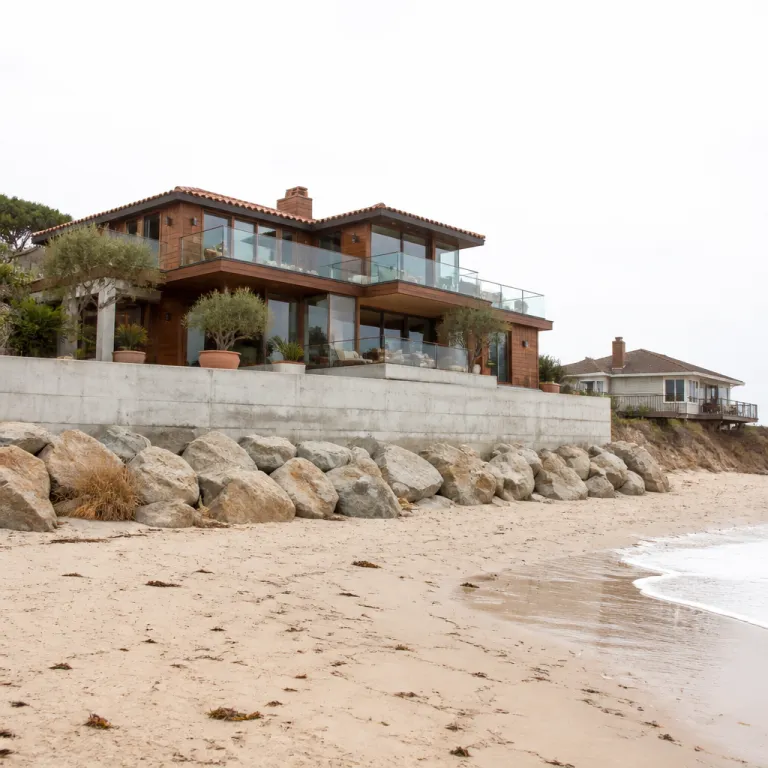
Insurance premiums as the new price signal for coastal luxury
Insurance pricing has become the most candid voice in coastal luxury real estate. When you track luxury coastal property climate risk insurance across a portfolio, you see the repricing of climate exposure long before it appears in glossy market reports. Underwriters move faster than brokers, and their evolving view of each waterfront estate is increasingly shaping long term value.
For high net worth buyers and existing owners, the shift is stark in markets such as South Florida, Malibu, and the Gulf Coast, where property insurance costs are rising 10 to 25 percent annually for high value coastal properties, according to multiple state insurance regulator filings between 2022 and 2024 (for example, Florida Office of Insurance Regulation quarterly rate hearings and Texas Department of Insurance homeowners rate filings). Those increases are not simply a reaction to one bad storm season; they are a structural response to rising sea levels, more frequent storm surge, and the growing probability of tidal flooding at ground level documented in National Oceanic and Atmospheric Administration (NOAA) tide gauge records. In practice, the insurance market is now segmenting coastal markets into insurable luxury real estate and high risk assets that insurers quietly push toward self retention.
Every serious buyer of a waterfront property should now treat the full insurance file as a core due diligence document. You want ten years of flood insurance history where possible, with clear data on coverage limits, exclusions, deductibles, and any periods when insurers withdrew or imposed moratoriums on new policies. When you see repeated non renewals, shrinking coverage, or abrupt premium spikes on otherwise stable properties, that is the canary in the coal mine for future market liquidity and a leading indicator that climate risk is being repriced ahead of headline valuations.
Illustrative case: two neighboring Miami Beach properties
Consider two similar waterfront homes in Miami Beach, both valued around $12 million and located within a few blocks of each other. One sits at approximately 3 feet above local mean high tide, with no elevation works and a history of minor flood claims. The other is elevated closer to 7 feet, with upgraded drainage and hurricane rated construction.
Based on recent broker and insurer quotes for comparable properties in ZIP codes 33139 and 33140 (drawing on 2023–2024 submissions to specialty high net worth carriers and surplus lines markets), the lower lying home now faces annual combined wind and flood premiums approaching $140,000, with a 5 percent hurricane deductible and narrower storm surge coverage. The elevated property, by contrast, is insuring for roughly $70,000 per year with broader terms and a lower percentage deductible. Over a 20 year holding period, that differential in insurance costs alone can erase more than $1 million in net value, even before accounting for potential reclassification into higher risk zones or additional resilience capital expenditure.
From sea view premium to climate risk discount
There was a time when proximity to the sea commanded an automatic price premium, regardless of the underlying climate risks. That era is ending in parts of Florida and South Florida, where buyers now ask first about flood maps, storm surge models, and the resilience of coastal properties before they talk about the view. In these coastal markets, luxury real estate is quietly bifurcating into resilient coastal properties and vulnerable assets that will require heavy capital expenditure just to remain insurable.
Insurers are not sentimental about a luxury coastal property; they price the risk of flood, wind, and rising sea level with actuarial precision. As one senior coastal underwriter recently summarized in an industry roundtable hosted by a major reinsurance broker in 2023, “We are no longer pricing last year’s weather; we are pricing the next 20 years of water.” When the cost of property insurance doubles while rental yields and resale values stagnate, the net present value of that property falls, even if headline real estate prices still look strong. Over the next decade, expect the market to reward coastal property that sits slightly back from the sea, on higher ground level, with robust flood defenses and documented resilience upgrades.
Owners who ignore these signals risk holding properties that become functionally uninsurable, or only insurable through expensive surplus lines with narrow coverage. Once a property crosses that line, the buyer pool shrinks dramatically, because most sophisticated buyers now require stable insurance as a condition of acquisition. In that sense, luxury coastal property climate risk insurance is no longer a back office detail; it is a primary driver of both present value and exit strategy, and a practical filter for deciding which homes merit further investment.
Where climate risk is already repricing: florida, Malibu, Gulf Coast
The most advanced laboratory for climate risks in luxury real estate is South Florida, where the combination of porous limestone, rising sea levels, and intense storm surge has forced insurers to rethink coverage. In Miami Beach and parts of Broward County, some coastal properties now face deductibles so high that the practical value of the policy is limited, even as premiums climb each renewal cycle. That dynamic is pushing serious buyers to compare not just listing prices, but the full cost of luxury coastal property climate risk insurance over a 20 year horizon.
On the Gulf Coast, from Naples to Galveston, the pattern is similar but more uneven across local coastal markets. Properties with slightly higher ground level, modern elevation standards, and hurricane rated construction are still achieving strong valuations, while older estate homes closer to the sea are quietly trading at discounts once you factor in flood insurance and windstorm coverage. Malibu and parts of the Pacific coast add wildfire to the mix of climate risks, creating a complex risk stack that many insurers now treat as high risk even when the sea level threat appears more distant.
For an international buyer comparing these markets with the Mediterranean or Caribbean, the key is to look beyond headline prices and focus on the trajectory of property insurance terms. A villa in South Florida with rapidly rising premiums and shrinking coverage may be less attractive than a similarly priced coastal property in a jurisdiction where regulators are actively managing the insurance market. Resources such as a detailed luxury real estate investment guide on the seven metrics that matter more than location can help you benchmark these trade offs across your global portfolio.
Sample premium trajectories by region (illustrative)
| Region | Typical property value | Approx. annual premium 2018 | Approx. annual premium 2024 | Primary drivers |
|---|---|---|---|---|
| South Florida oceanfront | $8–15M | $40k–$70k | $80k–$150k | Storm surge, tidal flooding, FEMA remapping |
| Gulf Coast barrier islands | $5–10M | $25k–$45k | $50k–$90k | Hurricanes, windstorm pools, higher deductibles |
| Malibu coastal hillside | $10–20M | $30k–$55k | $60k–$110k | Wildfire, mudslide, coastal erosion |
These ranges synthesize recent filings from state insurance departments, major carrier rate manuals, and broker quotes for high value coastal homes; they are directional rather than property specific, but they illustrate how quickly insurance costs can outpace general inflation in exposed coastal zones. Methodologically, the figures aggregate 2018 and 2024 sample premiums for owner occupied homes in the stated value bands, normalize for coverage limits and deductibles, and then express the results as rounded ranges to reflect variation across carriers and individual risk characteristics.
Markets where the repricing has not yet arrived
By contrast, many Mediterranean and Caribbean coastal markets still price sea view properties as if climate change were a distant abstraction. Insurers in those regions often rely on historical loss data that underestimates future sea level rise, tidal flooding frequency, and the intensity of storm surge events. That lag creates an illusion of stability in insurance coverage that may not survive the next decade of climate risks.
In Southeast Asia, rapid development along the sea has produced entire new districts of luxury real estate built at marginal ground level, sometimes without robust flood defenses or transparent flood insurance frameworks. Buyers attracted by relatively low premiums and generous coverage limits should ask how those numbers would change under a more conservative climate scenario. When the insurance market eventually recalibrates to reflect rising sea levels and more volatile weather, the repricing of these coastal properties could be abrupt rather than gradual.
For a globally diversified estate owner, the opportunity lies in reading these signals early and reallocating capital from high risk, underpriced insurance markets into jurisdictions that are already adapting. That does not mean abandoning the sea or coastal property altogether; it means preferring markets where regulators, insurers, and developers are aligned around realistic climate risk assumptions. Sophisticated buyers who internalize this shift now will be better positioned when the rest of the market catches up.
FEMA remapping, building codes, and the legal pivot in the United States
In the United States, the legal landscape around flood risk is changing almost as fast as the climate itself. The ongoing Federal Emergency Management Agency remapping of flood zones is reclassifying thousands of coastal properties, often moving them into higher risk categories overnight. For owners of luxury real estate along the Atlantic and Gulf coasts, that can mean mandatory flood insurance where none was required before, or sharply higher premiums for existing policies under the National Flood Insurance Program and private market equivalents.
When a property shifts from a moderate to a high risk flood zone, lenders may tighten their requirements, and insurers may revise coverage terms mid cycle. That reclassification can also trigger new building code obligations for any substantial renovation, including elevation requirements, breakaway walls, or restrictions on habitable space at ground level. For estate owners planning major upgrades, the legal and construction cost implications of these changes can rival the headline price of the property itself.
Ownership structures add another layer of complexity, especially when a coastal property is held through an LLC or trust. Some insurers now differentiate property insurance terms based on whether the named insured is an individual, a corporate entity, or a foreign buyer, which can affect both coverage and liability. Before you embark on a significant renovation or change of use, it is worth reviewing specialist guidance on living in a home owned by your LLC to ensure that your legal structure aligns with your insurance and estate planning objectives.
Building codes tightening for coastal zones
Across South Florida, the Carolinas, and parts of the Gulf Coast, building codes for coastal property have tightened significantly in response to repeated storm seasons. New construction often must meet higher elevation standards, more robust wind resistance, and stricter rules for mechanical systems located above projected flood levels. These requirements increase upfront costs, but they also improve the insurability and long term resilience of luxury coastal properties.
For existing estate homes, substantial renovations can trigger these modern standards even if the original property predates them. That means a seemingly simple extension or pool house can cascade into mandatory structural upgrades, with direct implications for both flood insurance eligibility and premium levels. Buyers who understand this legal framework can negotiate more effectively, either by adjusting price expectations or by requiring the seller to complete specific resilience works before closing.
From a legal risk perspective, failing to comply with updated codes can jeopardize both coverage and claims outcomes under your luxury coastal property climate risk insurance. Insurers are increasingly explicit that non compliant work, unpermitted additions, or outdated flood mitigation measures may limit payouts after a major event. Treat the building code file, the FEMA flood map, and the full insurance history as a single integrated due diligence package whenever you evaluate a coastal estate.
Insurability, seawalls, and the economics of defending the shoreline
One of the hardest truths in coastal markets is that not every property can or should be defended indefinitely against the sea. Seawalls, revetments, and dune restoration projects can buy time, but they are capital intensive, heavily regulated, and uneven in their effectiveness across different coastlines. For luxury estate owners, the key legal and financial question is whether the cost of defending a specific property aligns with its long term value and insurability.
In parts of Florida and the Gulf Coast, private seawalls are subject to complex permitting regimes that consider not only the individual property, but also the impact on neighboring coastal properties and public beaches. A high concrete wall that protects one estate can accelerate erosion next door, creating potential liability and community pushback. Insurers are increasingly attentive to these dynamics, sometimes offering better property insurance terms for integrated, community scale defenses rather than ad hoc structures.
From an insurance perspective, a well designed seawall or elevated foundation can reduce the probability of flood damage and improve the terms of flood insurance coverage. However, when sea level rise and repeated storm surge events overwhelm these defenses, insurers may still classify the area as high risk and adjust premiums accordingly. The most sophisticated buyers now commission independent engineering studies that model tidal flooding, rising sea levels, and storm surge scenarios over several decades before committing to major coastal property investments.
When a property becomes effectively uninsurable
There is a growing subset of coastal properties that insurers will not touch at any price, or only cover through surplus lines with very limited coverage. These are often homes at extremely low ground level, exposed to both sea level rise and frequent tidal flooding, sometimes with a history of repeated claims. Once a property crosses this threshold, its market value depends almost entirely on cash buyers willing to self insure, which dramatically narrows the buyer pool.
For an estate portfolio owner, holding such an asset can become a drag on overall performance, especially if local real estate taxes and maintenance costs remain high. In some coastal markets, we are already seeing quiet off market sales where sellers accept significant discounts to exit before the next round of insurance market tightening. The legal risk is that future buyers may argue that material climate risks or insurability issues were not adequately disclosed, so meticulous documentation and transparent communication are essential.
Strategically, it can be wiser to redirect capital from a marginal, high risk shoreline property into a better located luxury real estate asset slightly inland, with strong resilience features and stable insurance. That does not mean abandoning the sea entirely; it means choosing coastal markets and individual properties where the balance between climate risks, defense costs, and insurance availability still supports a rational long term investment thesis. In this environment, insurability is not a box to tick, but a central pillar of your estate strategy.
How sophisticated buyers are pricing 20 year climate risk
The most advanced buyers in coastal luxury are no longer asking whether climate change is real; they are asking how to price it over a 20 year holding period. That shift is reshaping negotiations, with climate risk models, insurance projections, and resilience capex plans now sitting alongside traditional valuation metrics. For an estate portfolio owner, this is less about fear and more about disciplined capital allocation across different coastal markets.
Practically, that means building a pro forma that includes not only current property insurance and flood insurance costs, but also a realistic trajectory of premium increases based on local climate risks. In South Florida, for example, assuming flat premiums for a waterfront property is no longer credible when insurers are openly signaling double digit annual increases in some ZIP codes. Buyers who model rising sea levels, more frequent storm surge, and potential reclassification into higher risk zones can negotiate from a position of strength.
Many of these buyers also integrate resilience investments into their acquisition underwriting, treating seawalls, elevation works, and whole home battery systems as part of the initial basis rather than optional extras. The recent surge in zero energy ready homes and the roughly 40 percent increase in whole home battery installations reported in industry surveys between 2019 and 2023 reflect a broader shift toward properties that can ride out both physical storms and insurance market volatility. In legal terms, documenting these upgrades carefully can support better coverage terms and smoother claims handling under your luxury coastal property climate risk insurance.
Legal clauses and deal structures that reflect climate reality
On the legal side, we are seeing more purchase agreements that include specific representations and warranties around flood history, insurance claims, and known climate risks. Sophisticated buyers may require the seller to provide a multi year history of insurance policies, premiums, and any non renewals, along with copies of correspondence with insurers about changing risk classifications. These documents help the buyer assess not only the current state of coverage, but also the direction of travel in the insurance market for that property.
Some transactions now include price adjustment mechanisms or seller credits tied to future changes in flood zone status or building code requirements. For example, if a property is reclassified into a higher risk zone within a defined period, the seller may agree to share in the cost of required resilience upgrades or increased insurance premiums. These structures acknowledge that climate risks and legal obligations are dynamic, not static, over the life of a coastal property.
For estate owners managing multiple coastal properties, aligning these legal tools with a broader portfolio strategy is essential. You want consistent standards for due diligence, disclosure, and insurance review across all acquisitions and dispositions, so that your exposure to rising sea levels and tightening regulations remains intentional rather than accidental. In this context, climate aware legal structuring is not a niche concern, but a core component of luxury real estate governance.
Positioning your coastal portfolio for the next decade
Over the coming decade, the gap will widen between coastal properties that adapt and those that cling to an outdated relationship with the sea. Insurance data, building codes, and climate models are converging to reward resilience and penalize denial, often more quickly than public narratives suggest. For an estate portfolio owner, the question is not whether this repricing will happen, but how you want to be positioned when it does.
A practical first step is to conduct an insurance audit across all your coastal properties, mapping current premiums, deductibles, and coverage limits against projected climate risks in each market. That exercise often reveals outliers where property insurance costs are rising faster than peers, or where flood insurance terms have quietly deteriorated despite stable headline valuations. Those are the assets that warrant deeper legal and technical review, and potentially a strategic exit or major resilience investment.
At the same time, there is opportunity in coastal markets that are proactively managing climate risks through transparent regulation, robust infrastructure, and sophisticated insurance frameworks. Aligning your acquisitions and renovations with these jurisdictions can enhance both the financial and lifestyle value of your portfolio, especially when combined with thoughtful tax and ownership structuring. For deeper context on how to weigh these factors across jurisdictions, a luxury home buying guide focused on the seven jurisdictions worth your due diligence can be a useful complement to your legal and insurance advice.
From reactive coverage to proactive resilience
The most resilient coastal portfolios treat insurance as one layer of a broader risk management strategy, not the only line of defense. That means investing in elevation, drainage, structural reinforcement, and energy resilience so that your properties are less exposed to both physical damage and insurance market shocks. In many cases, these upgrades also enhance day to day comfort and operational reliability, which matters when you actually live in these homes.
Over time, the market is likely to differentiate more clearly between luxury real estate that merely carries high premiums and luxury real estate that embodies thoughtful climate adaptation. Buyers will pay for the latter, because it offers both emotional security and more predictable long term costs in a world of rising sea levels and volatile weather. As you refine your estate strategy, treat luxury coastal property climate risk insurance not as a sunk cost, but as a real time signal guiding where to hold, where to invest, and where to quietly step back from the water’s edge.
Ultimately, the most valuable coastal properties of the next decade may not be the ones closest to the sea, but the ones that balance proximity with elevation, engineering, and insurability. Those are the homes where the sunset view at high tide still feels like a privilege rather than a calculation about the next storm surge. Align your legal, insurance, and design decisions with that future, and your coastal portfolio will remain both desirable and defensible in a changing climate.
Key figures on climate risk, insurance, and coastal luxury
- In many U.S. coastal states, average homeowners insurance premiums have risen by more than 20 percent over the past two years, with high value coastal properties often seeing increases at the upper end of that range, according to state insurance regulator reports and rate filings compiled between 2021 and 2024 (including summaries from the National Association of Insurance Commissioners and state residual market annual reports).
- Global mean sea level has risen by approximately 23 centimeters since the late nineteenth century, with the rate of increase accelerating in recent decades, as reported by the Intergovernmental Panel on Climate Change in its Sixth Assessment Report on observed climate change.
- In South Florida, so called sunny day tidal flooding events have increased more than fivefold over the past several decades, based on tide gauge data from NOAA for stations such as Virginia Key and Key West, directly affecting ground level infrastructure in low lying neighborhoods.
- In some high risk coastal zones, the share of properties insured through last resort state backed insurance pools has grown significantly, signaling a withdrawal of private insurers from the most exposed segments of the market, as documented in annual reports from residual market entities such as Citizens Property Insurance Corporation in Florida and the Texas Windstorm Insurance Association.
- Zero energy ready and highly energy efficient homes have grown rapidly as a share of new construction, with recent industry surveys indicating increases of more than 70 percent over several years, reflecting both regulatory pressure and buyer demand for resilient, low operating cost properties in climate exposed regions.
FAQ on luxury coastal property climate risk insurance
How does climate risk affect the insurability of a coastal luxury property ?
Climate risk affects insurability by changing how insurers model the probability and severity of events such as flood, storm surge, and wind damage. As rising sea levels and more frequent extreme weather increase expected losses, insurers may raise premiums, increase deductibles, narrow coverage, or withdraw from certain coastal markets altogether. For a luxury coastal property, maintaining insurability often requires both physical resilience upgrades and careful attention to building codes and flood zone classifications.
What should I review in the insurance file before buying a coastal estate ?
Before buying a coastal estate, you should review at least several years of insurance policies, including premiums, deductibles, coverage limits, and any exclusions related to flood or storm surge. It is also important to examine the claims history, any non renewals or mid term changes imposed by insurers, and correspondence about reclassification into higher risk zones. Together with local flood maps and engineering reports, this information provides a clear picture of both current and future insurance costs.
Can resilience upgrades meaningfully reduce my insurance premiums ?
Resilience upgrades can reduce premiums or improve coverage terms, but the impact varies by market and insurer. Elevating critical systems, installing flood barriers, reinforcing roofs and windows, and improving drainage can all lower expected losses, which some insurers reward through discounts or broader coverage. However, in very high risk zones, these measures may stabilize rather than dramatically reduce premiums, while still being essential for long term insurability and property protection.
How do changing flood maps and building codes affect renovation plans ?
Changing flood maps and building codes can significantly affect renovation plans by triggering new elevation requirements, structural standards, or restrictions on habitable space at lower levels. A project that seemed straightforward under old rules may require costly additional works once a property is reclassified into a higher risk flood zone. Engaging legal, engineering, and insurance advisers early in the planning process helps ensure that your renovation enhances both compliance and insurability.
Is it ever rational to self insure a coastal luxury property ?
Self insuring a coastal luxury property can be rational for some ultra high net worth owners, but it requires a clear understanding of worst case loss scenarios and a disciplined approach to reserving capital. In areas where traditional insurance is prohibitively expensive or unavailable, self insurance may be the only option, but it concentrates risk on your balance sheet. Many sophisticated owners use a hybrid approach, combining higher deductibles, targeted coverage for catastrophic events, and substantial investment in physical resilience to manage both cost and exposure.