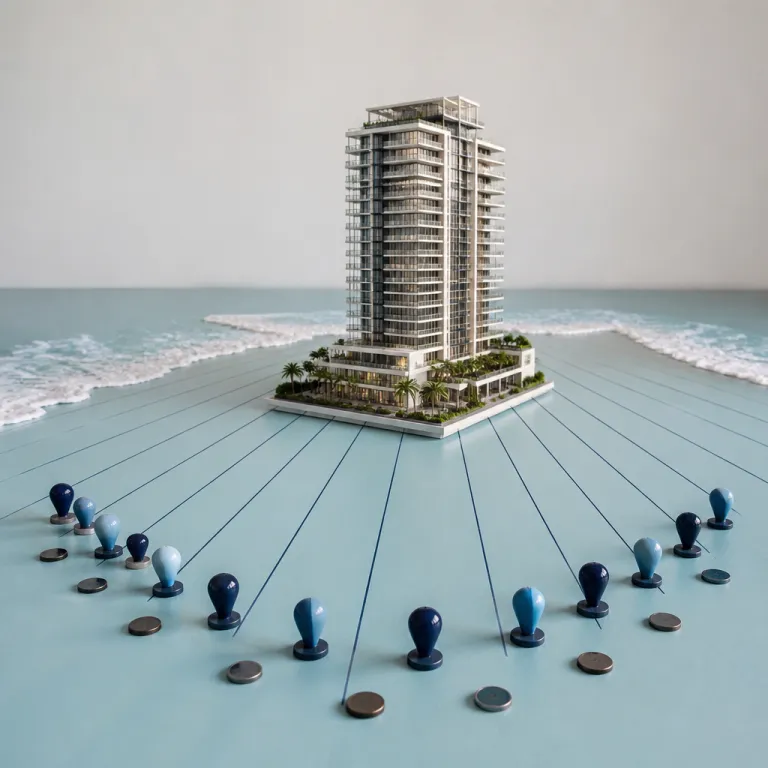
Reading the estate market before the first whistle
The FIFA World Cup 2026 effect on high-end housing is already visible in transaction data and in the way serious estate investors are quietly repositioning portfolios. In every host city across North America, the estate market is splitting between trophy properties that genuinely benefit from permanent infrastructure and those that are simply riding the hype of a one month event with no lasting cup impact. If you own or plan to own luxury real properties in any host city, you need to distinguish between short term noise and long term structural appreciation.
Think of this tournament as a stress test for each local real estate ecosystem rather than a guaranteed windfall, because the World Cup will reward only the neighborhoods where infrastructure investment and infrastructure improvements outlive the final match. In London’s Stratford district, for example, a 2017 report from the UK Office for National Statistics and Land Registry data showed average condo prices within roughly a kilometer of the Olympic stadium rising by more than 30% in the five years after 2012, while in parts of Qatar, post event figures from ValuStrat and local brokers indicate that the short term rental boom faded quickly and left some investors overexposed to temporary demand. The lesson for exclusive estate owners is clear: focus on permanent infrastructure and enduring neighborhood narratives, not just proximity to a stadium or fan zone.
Across the sixteen host cities, the premium property response to the 2026 tournament is already uneven, and that asymmetry is where sophisticated capital finds its edge. Some estate market segments are pricing in a speculative premium that assumes flawless cup preparations, uninterrupted tourism flows, and ever rising property values, while other segments in the same city still trade at a discount to their likely post event equilibrium. Your task is to read which World Cup sub markets are genuinely underwritten by infrastructure investment and which are simply being pulled higher by momentum in the broader real estate cycle.
Miami, Dallas, Houston and the new southern corridor of value
In the United States, the sharpest early World Cup 2026 luxury property repricing is emerging along a loose southern corridor that links Miami, Dallas and Houston, with Atlanta not far behind. Miami was already a global estate market outlier, but the combination of host city status, waterfront scarcity and cross border investment has pushed luxury real property values in select neighborhood pockets to new territory. According to 2023 figures cited by the Miami Association of Realtors and local MLS data, prime waterfront condos in Miami Beach and Edgewater traded roughly 15–20% higher than pre pandemic peaks, and the question for an exclusive estate owner is not whether Miami will benefit, but which micro markets will still make sense once the post event dust settles.
In Miami, the most resilient appreciation is likely to cluster around established waterfront properties and select downtown and midtown towers that sit on top of permanent infrastructure, rather than purely speculative development near the stadium. Short term rental yields in branded residences and serviced apartments are already being repriced for the tournament period, with some owners modeling nightly rates at two to three times current levels based on AirDNA and local broker projections, yet the real test will be whether long term rental demand and resale liquidity justify today’s entry prices. For a deeper seasonal view on coastal supply constraints, the summer waterfront map of unsurfaced listings offers a useful counterpoint to the current frenzy in Miami and other host cities, and you will find that perspective in this curated waterfront markets analysis from The Exclusive Estate.
Dallas and Houston present a different 2026 World Cup real estate profile, because their land supply and development pipelines are far more elastic than Miami’s. In Dallas, the downtown–Uptown axis around the Arts District is seeing a measured rise in luxury real estate values, with recent reports from the Texas Real Estate Research Center and local MLS data showing high end condo prices up roughly 8–10% year on year, while estate investors remain cautious about fringe properties that rely solely on stadium adjacency and short term fan traffic. Houston’s energy driven economy and ongoing infrastructure improvements around transit corridors, documented in the City of Houston capital improvement plan and METRO transit upgrades, mean that the event may simply accelerate an existing trend toward higher quality urban living rather than create a speculative bubble in one isolated neighborhood.
Vancouver, Toronto, Mexico City and the cross border luxury map
North of the border, Vancouver and Toronto illustrate how the 2026 World Cup interacts with already constrained urban fabrics at the top end of the market. Vancouver’s world class setting and strict development controls mean that any incremental demand from the tournament will likely translate into selective appreciation rather than a construction boom, especially in waterfront and downtown and midtown luxury real properties. For estate investors who already hold assets there, the event functions more as a catalyst for rental repricing and portfolio optimization than as a reason to chase new speculative development, a view echoed in recent Canada Mortgage and Housing Corporation (CMHC) and Statistics Canada housing reports.
Toronto’s estate market is more elastic, yet the combination of host city status, financial sector employment and ongoing infrastructure investment around transit oriented corridors is creating a layered opportunity set. Short term rental demand around the stadium and entertainment district will spike during the event, but the more interesting play for exclusive estate owners lies in long term positioning along the emerging urban corridor that links downtown and midtown cultural hubs with new residential enclaves. A recent outlook from Sotheby’s International Realty on inherited wealth and cross border demand shows how global capital is already treating luxury real estate not as an asset class B, but as a primary legacy vehicle, and that mindset is particularly visible in Toronto’s prime neighborhoods.
South of the border, Mexico City and Guadalajara offer a different flavor of World Cup 2026 luxury real estate dynamics, blending lifestyle migration with event driven visibility. In Mexico City, established districts such as Polanco and Lomas already command premium property values, so the tournament’s influence will likely be felt more in short term rental pricing and in the acceleration of boutique development near cultural and gastronomic corridors than in raw land speculation, according to recent market notes from AMPI and local brokerage transaction logs. Guadalajara’s emerging luxury real estate scene, anchored by tech sector growth and improving infrastructure highlighted in Jalisco state investment plans, may see a sharper cup impact as international estate investors reassess the city’s role in their world portfolios after the event.
Short term yield, long term positioning and the double event corridor
The most tempting aspect of the 2026 World Cup for property owners is the visible spike in short term rental yields that host cities are already pricing into their projections. In select neighborhoods near each stadium, nightly rates for luxury real properties during the tournament period are being modeled at multiples of current levels, and estate investors are running spreadsheets that show rapid payback periods based on a few weeks of elevated rental activity. That math can work, but only if you treat the event as a bonus on top of a sound long term thesis rather than the core of your investment story.
Where the analysis becomes more interesting is along the emerging double event corridor in Southern California, where the World Cup and the Los Angeles Olympics will share and extend permanent infrastructure. In Los Angeles, the combination of cup preparations, airport and transit upgrades, and new world class venues creates a rare alignment of infrastructure investment that can support sustained appreciation in select luxury real estate sub markets. For an exclusive estate owner, the key is to focus on properties that benefit from both events and from broader urban improvements, rather than on assets that rely solely on a single host moment for their valuation; recent City of Los Angeles budget documents and LA Metro expansion plans provide a public roadmap of those improvements.
Across all sixteen host cities, the most resilient 2026 World Cup property impact will accrue to properties that sit at the intersection of permanent infrastructure, diversified demand and high quality design. Short term rental income during the event can enhance returns, but the real value lies in owning luxury real estate that remains compelling to end users and tenants long after the post event headlines fade. If you treat this tournament as a lens through which to reassess your global estate market exposure, rather than as a one off speculation, you will likely emerge with a portfolio better aligned to both current host city dynamics and the quieter cycles that follow.
FAQ
Which host cities show the strongest long term upside for luxury property values ?
Among the sixteen host cities, Miami, Los Angeles, Toronto and Vancouver currently show the most compelling long term upside for luxury property values. Each combines world class lifestyle appeal with meaningful infrastructure improvements and constrained prime land, which supports both capital appreciation and resilient rental demand beyond the World Cup event. Mexico City and Guadalajara offer higher risk but potentially higher reward profiles, especially for estate investors comfortable with emerging luxury real estate markets and the policy frameworks documented in recent municipal development plans.
How should an exclusive estate owner balance short term rental income and long term value ?
The most robust strategy is to underwrite any acquisition on conservative long term rental and resale assumptions, then treat World Cup related short term rental income as upside. Properties near a stadium or fan zone can deliver exceptional short term yields, but they must also appeal to year round tenants or end users once the post event period begins. Focus on permanent infrastructure, neighborhood quality and design before optimizing for tournament month pricing, and cross check your assumptions against local MLS history and independent rental data providers.
Are speculative pre event developments near stadiums a good idea ?
Pre event development near stadiums can work when it is anchored by broader infrastructure investment and mixed use planning, as seen in London’s Stratford regeneration documented by the London Legacy Development Corporation. Purely speculative projects that rely on a single event driven spike in demand are far more vulnerable to delays, cost overruns and weaker than expected post event absorption. For most exclusive estate owners, allocating only a small portion of capital to such speculative development while keeping the core portfolio in established neighborhoods is a more prudent approach.
What role does infrastructure investment play in the FIFA World Cup 2026 luxury real estate impact ?
Infrastructure investment is the primary driver that separates lasting 2026 World Cup property effects from temporary hype. Upgrades to airports, transit corridors, public spaces and utilities create permanent infrastructure that supports higher property values and better rental performance long after the event. When evaluating any host city opportunity, verify that the promised infrastructure improvements are funded, under construction and integrated into a coherent urban plan, using city budget documents, transport authority reports and independent planning studies as reference points.
How can existing luxury property owners in host cities prepare for the event ?
Existing owners should start by auditing their properties for regulatory compliance, hospitality readiness and pricing strategy in relation to short term rental platforms. It is wise to refresh interiors, optimize digital marketing assets and secure professional management well before the World Cup to capture peak demand without operational stress. At the same time, review your broader estate market exposure to ensure that any event driven gains fit within a disciplined, long term portfolio plan, ideally benchmarked against local transaction data and independent valuation reports.