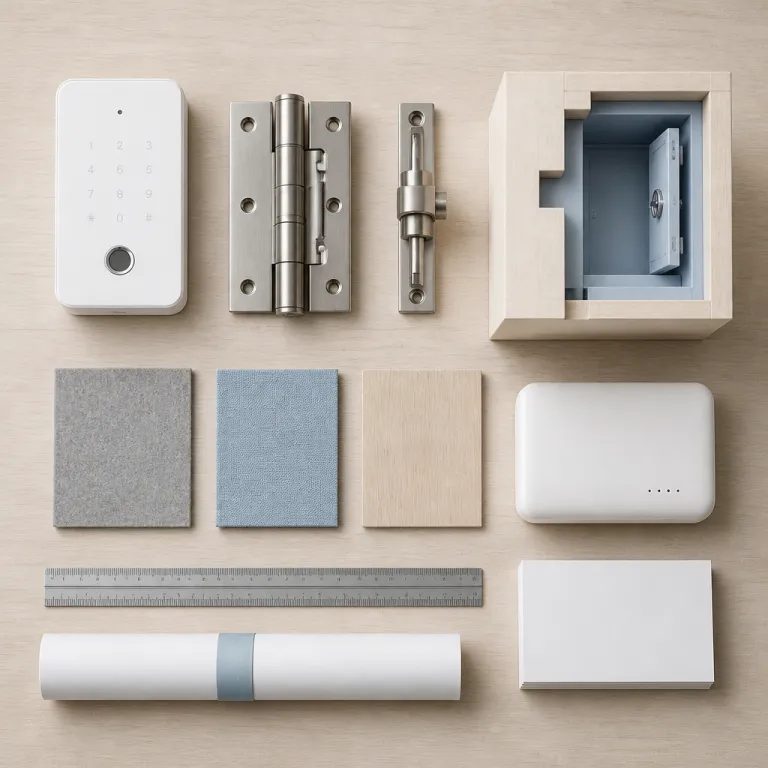
From amenity to infrastructure: how security now defines luxury living
Security has shifted from optional upgrade to defining infrastructure in every serious luxury home. In Sotheby’s International Realty’s Luxury Outlook 2023, a global survey of more than 500 top-tier agents across 40+ markets found that approximately four out of five respondents ranked residential security and privacy features above spa suites and wine galleries as buyer priorities. In this context, you are no longer buying décor but a defensive architecture for your family, data and lifestyle. In the most sought-after homes from Bel Air to Cap Ferrat, the real specification sheet now starts with the protection system, not the stone.
For exclusive estate owners, the modern home is a node in a global life, and that reality demands integrated security systems rather than scattered gadgets. You move between properties, staff rotate, children arrive with friends, and each estate must maintain the same level of discretion, privacy and physical safety without feeling like a bunker. The result is a new generation of smart home infrastructure where cameras, access control, smart locks and professional monitoring are designed into the walls, not bolted on later, and managed through a unified security platform.
In this environment, advanced privacy and security provisions have become the quiet currency of serious real estate transactions. Buyers now ask first about layered security measures, from perimeter beams to interior monitoring zones, and only then about the pool house or cinema. Panic rooms, once eccentric, are now treated as standard safety cores in luxury homes, specified with independent power, redundant communications and discreet home integration into the overall system so that they function as a protected hub rather than a visible vault.
The paradox is that the more connected our homes become, the more vulnerable the estate can feel without disciplined control. A smart home that manages lighting, climate and entertainment through a single tablet also exposes new attack surfaces if home automation is not secured to the same standard as your family office network. The most advanced luxury real estate portfolios now treat security and privacy as a board-level topic, with the same rigor applied to a property as to a regulated financial institution, including periodic risk reviews and documented incident response plans.
For you as a portfolio owner, the question is no longer whether to invest in home security, but how to specify a coherent system across multiple properties and jurisdictions. A chalet in Gstaad, a penthouse in Dubai and a waterfront estate in Palm Beach each face different risks, yet your peace of mind depends on a unified philosophy of security measures and monitoring. The most effective approach treats each home as a component in a single, high-resilience security system, with shared standards for access, cameras, control and data handling that can be audited and upgraded over time.
Designing privacy first estates: from gates and cameras to invisible control
Privacy-driven design now starts at the site plan, long before the first camera is specified or the first smart lock is chosen. Architects working at the top of the market in places like Los Angeles, Lake Como and the Balearic Islands now shape the estate layout around layered privacy security, using elevation, landscaping and circulation patterns to keep private zones genuinely private. The most successful custom homes feel open to the view yet opaque to the street, with security technology embedded so elegantly that guests notice the art before the access control.
Gated drives, guard houses and perimeter security systems remain essential, but they are only the outer ring of a more nuanced strategy. Inside the property line, you want graduated access control that separates staff circulation from family routes, and public entertaining areas from intimate living spaces, all managed through a unified home automation system. In practice, that means using smart locks, keyless credentials and role-based permissions so that every person on the estate has exactly the access they need, and nothing more, with logs that can be reviewed centrally.
For many homeowners, the real luxury is the ability to host freely without sacrificing privacy or safety. A well-designed security system allows caterers, florists and drivers to move through service corridors while cameras and monitoring focus on sensitive thresholds rather than every social interaction. When luxury homes are planned this way, security measures support the lifestyle instead of constraining it, and the estate feels both relaxed and tightly controlled, even during large-scale events.
Neighborhood selection now plays as much of a role as the individual property specification. Privacy-focused enclaves, from the manned gate communities of North Scottsdale to the island compounds off Miami, command premiums because the entire environment is engineered for security, privacy and low visibility. For owners considering age-restricted or highly curated communities, a tailored approach to privacy for exclusive estate owners can be seen in resources such as this analysis of a private 55 community model for discerning homeowners, where access, monitoring and shared systems are calibrated to a specific lifestyle and governance framework.
Inside the residence, high-end security now extends to interior zoning and data handling. Primary suites, studies and safe rooms are often placed in a separate security domain, with independent access control, dedicated cameras and sometimes a standalone home security system that can operate even if the main estate network is compromised. This layered approach gives you peace of mind that a breach in one part of the property does not cascade into a full loss of privacy or safety, and that sensitive areas remain protected even during maintenance or renovation work.
Panic rooms, smart homes and the new hierarchy of value
The market has quietly rewritten the hierarchy of what matters in high-end real estate, and panic rooms now sit near the top of that list. Where a decade ago a safe room was a curiosity, today serious buyers in London, New York and Dubai treat it as a non-negotiable core feature of a true luxury home. In interviews cited by Christie’s International Real Estate market reviews, leading agents report that a well-designed safe core can sway a decision more decisively than an elaborate pool house or secondary entertaining pavilion.
In practice, the modern panic room is less a single chamber and more a hardened zone within the home, integrated into the overall security system. Typical specifications include:
- Reinforced walls, doors and glazing designed to resist forced entry for a defined period
- Independent ventilation and power, with battery backup and sometimes generator feeds
- Redundant communications, including secure voice and data links to professional monitoring
- Discreet access from primary suites and family rooms, often via concealed doors or corridors
- Control panels isolated from the main smart home interface to reduce cyber risk
As smart homes become the norm in luxury living, the integration between home automation and security systems becomes a critical differentiator. Lighting, blinds and audio can be programmed to respond automatically to security events, while cameras and facial recognition systems can adjust their monitoring profiles based on who is present on the estate. When these features are properly configured, the property feels intuitive and calm, yet every movement and access point is under precise control, with alerts routed to both on-site staff and remote guardians.
Location still matters, but the definition of a prime address is evolving toward privacy-driven neighborhoods rather than purely famous streets. Gated island communities such as those near Dorado Beach in Puerto Rico illustrate how a gated community structure can enhance both perceived safety and real security measures through controlled access and shared infrastructure. For portfolio owners, this means that the right combination of neighborhood security and in-home systems can yield a stronger long-term value proposition than a landmark façade alone, especially when documented in due diligence materials.
Resale dynamics now reflect this shift with increasing clarity across global real estate markets. Properties with robust, well-documented home security infrastructure, including panic rooms, smart locks, integrated cameras and professional monitoring contracts, tend to attract a broader buyer pool and face fewer objections during due diligence. By contrast, visually impressive homes with weak security and privacy provisions often require price adjustments or post-acquisition capital expenditure, eroding the apparent value of the estate and extending time on market.
Cybersecurity, data privacy and portfolio level peace of mind
The least visible yet most critical frontier in luxury home protection is digital. Every connected camera, access control panel and smart lock is both a convenience and a potential entry point into your private life, your property layouts and even your financial footprint. For exclusive estate owners, the line between home security and cyber defense has effectively disappeared, and vulnerabilities in one domain can quickly be exploited in the other.
Smart home ecosystems now sit alongside your family office platforms and private banking portals as high-value targets for sophisticated attackers. A compromised security system can expose floor plans, camera feeds and access logs, turning the very systems designed for safety into tools for surveillance if not properly secured. That is why leading families now subject their home integration platforms, monitoring vendors and even installers to the same due diligence applied to wealth managers and legal advisers, including background checks and contractual data protection obligations.
At portfolio scale, the challenge is to harmonize security measures across different countries, regulatory regimes and technology stacks. One estate may rely on European-certified security systems with strict data retention rules, while another in the Caribbean uses a different set of cameras, sensors and professional monitoring providers. The most resilient approach is to define a single security and privacy standard for all your homes, then require each local system to meet or exceed that benchmark, regardless of local norms or vendor preferences.
Owners who treat their properties as a coherent real estate portfolio rather than isolated homes tend to achieve better outcomes in both safety and value preservation. Centralized oversight of access rights, regular penetration testing of smart home networks and periodic audits of camera configurations can all be coordinated from a single trusted team. For a sense of how lifestyle, governance and security intersect in practice, many owners look to curated communities such as those profiled in this piece on life at Riverside Pointe for exclusive estate owners, where privacy, safety and daily comfort are engineered together and reviewed on an ongoing basis.
Ultimately, peace of mind in luxury living now depends on aligning physical, digital and operational security into one coherent architecture. That means specifying residential security and privacy features with the same precision you apply to tax structuring or investment mandates, from facial recognition policies to data storage locations for your cameras and access logs. When done well, the result is not a fortress, but a collection of custom homes that feel effortlessly private, quietly safe and fully aligned with the way you and your family actually live.
Key figures shaping the new security standard in luxury homes
- Sotheby’s International Realty notes in its recent Luxury Outlook series that security consistently ranks as the top concern for high-net-worth buyers, a shift that has elevated panic rooms and integrated security systems above traditional amenities such as pool houses or media rooms. The often cited figure of around 80% of agents prioritizing security is drawn from aggregated survey responses from more than 500 agents across multiple prime markets, collected within the last two years.
- Across major global markets, research from Knight Frank’s Wealth Report and Prime Residential Insights indicates that properties in privacy-focused gated communities can command premiums approaching 20% compared with similar homes on open streets, reflecting the value buyers place on neighborhood-level access control and shared safety infrastructure.
- Industry surveys of smart home adoption, including data from the Consumer Technology Association and leading integrators, indicate that more than 60% of new luxury homes now include some form of home automation tied directly to home security, including smart locks, integrated cameras and centralized monitoring dashboards.
- Specialist security consultancies and cost benchmarking studies referenced in Christie’s International Real Estate market reviews report that comprehensive upgrades to bring an existing luxury home up to current security and privacy standards typically represent between 1% and 3% of the property value. In practical terms, that can range from roughly $150,000 to $600,000 on a $20 million estate, covering design, installation and commissioning of integrated systems.
- Cybersecurity assessments of connected estates, summarized in reports from firms such as Kaspersky, Palo Alto Networks and other enterprise security providers, show that a significant share of vulnerabilities arise from poorly configured cameras and access control devices, underscoring the need to treat digital security measures as an integral part of overall estate protection rather than an afterthought.
References
- Sotheby’s International Realty – Luxury Outlook report series (agent survey data on buyer priorities and security; global sample of 500+ agents across multiple prime markets)
- Knight Frank – The Wealth Report and Prime Residential Insights (analysis of gated community premiums and privacy-driven demand in leading luxury destinations)
- Christie’s International Real Estate – Global Luxury Real Estate Market Review (commentary on security infrastructure, upgrade costs and buyer expectations in high-end property transactions)