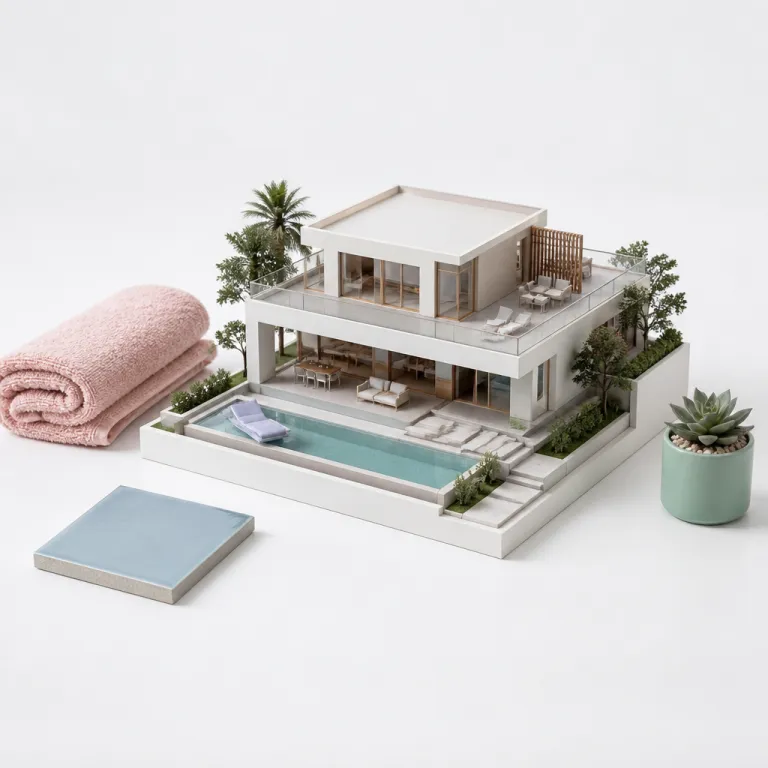
From tax arbitrage to lived experience as the new luxury home purchase driver
From tax arbitrage to lived experience as the new luxury home purchase driver
For the first time, lifestyle has become the dominant luxury home purchase driver for serious buyers in 2026. When Sotheby's International Realty surveyed its global network in 2023, 62% of professionals said lifestyle now outweighs tax efficiency, economic stability and political calm for the typical affluent client (Sotheby's International Realty, 2023 Luxury Outlook, global network survey of more than 1,000 real estate professionals conducted in late 2022). That single shift quietly rewrites how you should position every high-end residence in your portfolio.
Philip White, President and CEO of Sotheby's International Realty, framed the new mindset clearly when he said, "Prime real estate can be one of the most trusted ways people preserve and express wealth" (Sotheby's International Realty, 2023 Luxury Outlook). That sentence matters because it links wealth preservation with self-expression, turning each property from a tax shelter into a stage for long-term identity. In this context, luxury homes are no longer just balance sheet assets but curated environments where ownership, privacy and daily rituals converge at a higher level.
For years, the ultra-luxury estate market rewarded jurisdictions that optimised property taxes and income regimes above all else. Dubai, Monaco and the Cayman Islands built their brand on favourable rates, low ownership costs and a predictable housing market that attracted international capital. Today, those same markets compete just as aggressively on walkability, cultural depth, schooling and healthcare, because discerning buyers now ask how a home feels at dusk, not only what the tax report shows.
That hierarchy flip is structural, not cyclical, because it is anchored in how long-term behaviour changed after the pandemic. Remote-capable owners realised that the real estate they occupy most of the year shapes their health, relationships and productivity more than any marginal tax gain. The high-end market is therefore being re-priced around quality-of-life metrics that traditional market report templates barely tracked.
Look at the data behind this lifestyle-first pivot and the pattern is consistent across continents. There has been a reported increase in demand for homes that integrate wellness architecture, biophilic design and flexible work zones, even when the entry-level price for such properties is significantly higher. For a growing share of luxury buyers, the perceived risk of a compromised lifestyle now outweighs the financial risk of paying a premium property price in a prime estate market.
That does not mean the tax conversation disappears from luxury housing strategy, especially for owners with complex net worth structures. It means tax now acts as a filter applied after a lifestyle shortlist is created, rather than the starting point for every buying decision. Sellers who still lead with tax and only mention lifestyle in passing will quietly lose the most motivated buyer in the room.
For you as an exclusive estate owner, this shift has two direct implications. First, the real value narrative of your property must move from abstract wealth preservation to concrete daily experience, from square metres to how those metres choreograph your life. Second, every future acquisition in your real estate portfolio should be screened for its ability to sustain long-term wellbeing, not just its projected resale value or its place in a market report.
In practice, that means rethinking how you present your homes to the next buyer, whether privately or through a trusted international adviser. It also means reassessing your own holdings through a lifestyle lens, asking whether each property still matches the way you actually live, work and age. The owners who adapt early will capture a higher level of demand and protect both their wealth and their time.
Tax led migration fatigue and the rise of lifestyle anchored ownership
The post-pandemic years created a wave of tax-led migration that looked rational on paper but often felt brittle in real life. Many affluent buyers moved quickly into low-tax jurisdictions, attracted by favourable property taxes, flexible residency rules and a housing market that promised fast resale options. A few years on, a quieter counter-current has emerged as some of those same owners reassess whether the lifestyle trade-off was worth the risk.
In private conversations with ultra-luxury owners in Dubai, Nassau and certain US sunbelt states, a recurring theme surfaces around lifestyle misalignment. They achieved the expected savings on ownership costs and income tax, yet found the daily experience of the home, the community and the city below their expectations. For a cohort that treats real estate as both a store of wealth and a stage for family life, that gap becomes intolerable over the long term.
That is where the lifestyle-first narrative becomes very concrete for you as a seller. The next buyer for your property may already have completed one tax-motivated move and now prioritises emotional fit, cultural access and social fabric over the last basis point of yield. When high-net-worth buyers reach that stage, they start reading listings differently, scanning for cues about neighbourhood rhythm, walkable amenities and the real level of privacy more than for headline tax advantages.
Consider how this plays out in established cultural capitals that once seemed disadvantaged on pure tax metrics. Cities like Paris, London and New York still face higher property taxes and ownership costs than many low-tax hubs, yet they offer unmatched density of museums, Michelin-level dining and global schools. For a buyer who has already optimised net worth, the marginal tax hit becomes acceptable when the home sits at the centre of a deeply textured life.
Within the United States, we see a similar recalibration between states that won the first wave of tax migration and those now winning on lifestyle. Florida and Texas remain attractive for the overall estate market, but within those states, micro-markets like Austin's Barton Creek or Miami's Coconut Grove outperform because they deliver community, greenery and human-scale streets. A refined example of this lifestyle-anchored ownership can be seen in the way ranch-style estates are framed in guides to living the refined lifestyle at Cypress Creek Ranch in Texas, where the narrative is about daily rituals rather than only about price per square metre.
For sellers, the lesson is clear: you must speak directly to this tax migration fatigue without criticising the jurisdictions that benefited from it. Acknowledge that the buyer has already optimised the financial side and now seeks a home that supports long-term health, relationships and creative work. That framing respects their intelligence and positions your property as the next logical step in their real estate evolution.
On the marketing side, this lifestyle-led shift requires a different balance between numbers and narrative. Yes, you still present a clear report on ownership costs, property taxes and projected resale performance, because sophisticated buyers expect that level of transparency. But the first pages of any bespoke brochure should now focus on how the home orchestrates mornings, entertains guests and protects privacy, not just on its place in the broader luxury market.
There is also a portfolio implication for you as an owner with multiple homes across jurisdictions. Instead of clustering properties solely in the most tax-efficient locations, many are now diversifying across lifestyle archetypes: an urban cultural hub, a coastal retreat, a mountain wellness base. That approach spreads both lifestyle risk and market risk, while keeping overall net worth anchored in prime real estate.
How sellers must reposition properties for the lifestyle first luxury buyer
If lifestyle now leads as the primary purchase driver in luxury real estate, then the way you present your property must change from the first line. Traditional listings in the high-end market often open with bedroom counts, floor area and a discreet nod to tax advantages, leaving the lived experience to the final paragraph. That order made sense when the primary buyer was a spreadsheet-driven investor, but it underserves the current generation of affluent homeowners.
Start by reframing your home not as a static property but as a choreography of spaces that support specific rituals. In a Chicago tower like 340 on the Park, for example, the most compelling narrative is not only the LEED certification or the skyline views but the way residents describe life at 340 on the Park from a refined perspective. That kind of storytelling translates directly to any high-level estate, whether it overlooks Biscayne Bay, the Côte d'Azur or the hills above Lake Como.
For your own listings, this means leading with the sensory and social dimensions that define the home. Describe how the morning light moves through the main living spaces, how the kitchen supports both private family dinners and chef-level entertaining, how the garden or terrace protects privacy while still connecting to the wider city. Then, once that emotional connection is established, you can layer in the more traditional real estate metrics around price, term, resale prospects and market comparables.
At the same time, do not underestimate how sophisticated the modern luxury buyer has become about data. They will still read every market report, track reported increases in local transaction volumes and benchmark your asking price against both entry-level and ultra-luxury segments. Your role as a seller, often working with a seasoned international adviser, is to pre-empt those questions with a clear, honest report that situates your home within the broader housing market.
One practical tactic is to build a concise dossier that integrates both lifestyle and financial information in equal measure. Include maps of walkable amenities, cultural institutions and green spaces alongside charts showing long-term price trends, ownership costs and property taxes in your micro-market. That balance signals respect for the buyer's intelligence and reinforces the idea that this is a serious wealth decision anchored in real data, not just a glossy brochure exercise.
Another shift involves how you talk about risk in the context of luxury homes. Instead of pretending that prime real estate is risk free, acknowledge the cyclical nature of the estate market while emphasising the resilience of top-tier locations with enduring lifestyle appeal. Properties that sit at the intersection of strong fundamentals and irreplaceable daily experience tend to hold value better across long-term cycles.
For multi-home owners, there is also an opportunity to reposition underperforming assets by enhancing their lifestyle proposition. Sometimes the issue is not the home itself but the way it is programmed; adding a wellness pavilion, reconfiguring circulation for better flow or upgrading acoustic privacy can move a property into a higher demand bracket. In a world where lifestyle-led dynamics dominate, such targeted upgrades often yield a better return than purely cosmetic changes.
Finally, consider how you personally engage with potential buyers during private showings. The most effective sellers now act less like hosts of a gallery and more like narrators of a life well lived in that specific home, sharing how the property supports work, rest and play across the seasons. That approach aligns with the new expectations of luxury buyers who see each acquisition as a chapter in their own story, not just another line in a portfolio report.
Global winners, pressured havens and what this means for your portfolio
The lifestyle-first realignment in 2026 is already reshaping which cities and regions quietly gain or lose favour among high-net-worth owners. Markets that once relied almost entirely on tax arbitrage now face pressure to deepen their cultural, educational and wellness infrastructure if they want to retain discerning buyers. At the same time, established cultural capitals and emerging lifestyle hubs are seeing a reported increase in interest despite higher nominal ownership costs.
On the winning side, you find cities and regions that combine strong rule of law, rich cultural ecosystems and access to nature within a short drive. Lisbon, for example, has moved from a niche choice to a mainstream option for luxury buyers who value Atlantic light, historic architecture and relatively moderate property taxes by European standards. Similar patterns appear in coastal Mexico, certain Mediterranean islands and select US mountain towns where the daily experience of the home and its surroundings justifies a premium price.
Traditional tax havens are not disappearing from the luxury market, but they are being forced to compete on more than just numbers. Dubai has invested heavily in museums, galleries and waterfront public spaces to elevate its real estate proposition from transactional to experiential. Monaco continues to refine its ultra-luxury housing stock, yet even there, buyers now ask sharper questions about crowding, privacy and long-term liveability before committing to ownership.
For you as an exclusive estate owner, the strategic question is how your current holdings align with this new hierarchy. A portfolio concentrated solely in low-tax but lifestyle-thin jurisdictions may face softer resale demand over the next cycle, especially at the ultra-luxury level. By contrast, a mix of homes in cities with deep cultural capital and in emerging lifestyle hubs can balance both market risk and personal enjoyment.
One underappreciated angle is the role of secondary and tertiary markets that offer refined living without global spotlight pricing. Certain Venezuelan coastal enclaves, for instance, are being reframed as "houses as refined assets" for discerning owners who understand both the political risk and the long-term lifestyle upside. A thoughtful analysis of Venezuela houses as refined assets for discerning estate owners shows how even complex markets can make sense when approached with clear eyes and a focus on lived experience.
In managing your own net worth, this means treating each home not only as a financial asset but as a lifestyle allocation. Ask whether each property still earns its place in your life by delivering a unique combination of privacy, community and daily joy that you cannot replicate elsewhere. If a home no longer meets that standard, the current environment may offer a favourable window to reposition or exit while demand for lifestyle-rich properties remains strong.
Looking ahead, expect market report formats from major brokerages and international brands to evolve as well. Instead of focusing solely on transaction volumes, median price and days on market, the most insightful reports will integrate lifestyle indicators such as walkability scores, cultural density and wellness infrastructure. Sellers who understand and speak this new language will be better positioned to articulate the full value of their homes to the next generation of luxury buyers.
Ultimately, the shift from tax-first to lifestyle-first does not diminish the importance of careful financial structuring in real estate. It simply recognises that for owners who have already secured their wealth, the scarcest asset is time well lived in spaces that truly fit. Align your portfolio with that reality, and both your balance sheet and your daily life will reflect the real meaning of luxury.
Key figures behind the lifestyle first shift in luxury real estate
To ground this lifestyle-led transition in data, the following table summarises key indicators drawn from recent industry research, including Sotheby's International Realty's 2023 Luxury Outlook and global brokerage reports from Knight Frank and Coldwell Banker Global Luxury (for example, Knight Frank, The Wealth Report 2023, survey of more than 500 private bankers and wealth advisers; Coldwell Banker Global Luxury, Global Luxury Market Insights 2023, analysis of high-end transactions across major metropolitan areas):
| Indicator | Recent data point | Source / context |
|---|---|---|
| Share of professionals citing lifestyle as increasingly important for high-net-worth buyers | 62% | Sotheby's International Realty network survey, 2023 (2023 Luxury Outlook) |
| Professionals prioritising tax considerations | 60% | Sotheby's International Realty, 2023 (2023 Luxury Outlook) |
| Professionals emphasising economic stability | 53% | Sotheby's International Realty, 2023 (2023 Luxury Outlook) |
| Professionals highlighting political stability | 49% | Sotheby's International Realty, 2023 (2023 Luxury Outlook) |
| Ultra-luxury buyers who treat wellness amenities and community integration as primary factors | >50% | Aggregated findings from Knight Frank (The Wealth Report 2023) and Coldwell Banker Global Luxury (Global Luxury Market Insights 2023) |
| Price growth for luxury homes with wellness, outdoor space and flexible work areas vs. comparable units without | Faster appreciation in multiple prime urban markets | Market analyses by leading international brokerages, 2022–2023 |
- According to Sotheby's International Realty surveys, 62% of professionals now cite lifestyle as increasingly important for high-net-worth homebuyers, compared with 60% who prioritise taxes, 53% who focus on economic stability and 49% who emphasise political stability, signalling a clear hierarchy change in purchase drivers.
- Global luxury housing transaction volumes have shown a reported increase in lifestyle-driven relocations, with multiple brokerage reports indicating that more than half of ultra-luxury buyers now consider wellness amenities and community integration as primary factors, not secondary perks.
- In several prime urban markets, entry-level pricing for luxury homes that integrate wellness, outdoor space and flexible work areas has risen faster than for comparable units without these features, suggesting that the market is already pricing in the lifestyle premium.
- Surveys of high-net-worth individuals by major wealth managers show that a majority now expect to spend a larger share of their time in their primary or secondary residences, reinforcing the importance of long-term liveability and reducing the appeal of purely speculative property holdings.
- Across multiple jurisdictions, ownership costs including property taxes, maintenance and staffing still represent a significant share of annual outlay, yet affluent buyers increasingly accept higher costs when the home delivers superior daily experience, indicating a willingness to trade financial efficiency for lifestyle quality.
